
Water damage claim denial happens most often when insurers classify damage as gradual seepage or deferred maintenance rather than a sudden, accidental event. These are not arbitrary decisions. Insurers rely on physical evidence, policy exclusions, and strict timelines to separate covered losses from excluded ones. Understanding why claim denial happens with water damage puts you in a much stronger position, whether you are filing a new claim or disputing a rejected one. The most common denied water damage claim reasons include long-term leaks, neglected pipes, mold growth, and late reporting. Each one has a specific policy mechanism behind it.
Why claim denial happens with water damage: the core reasons
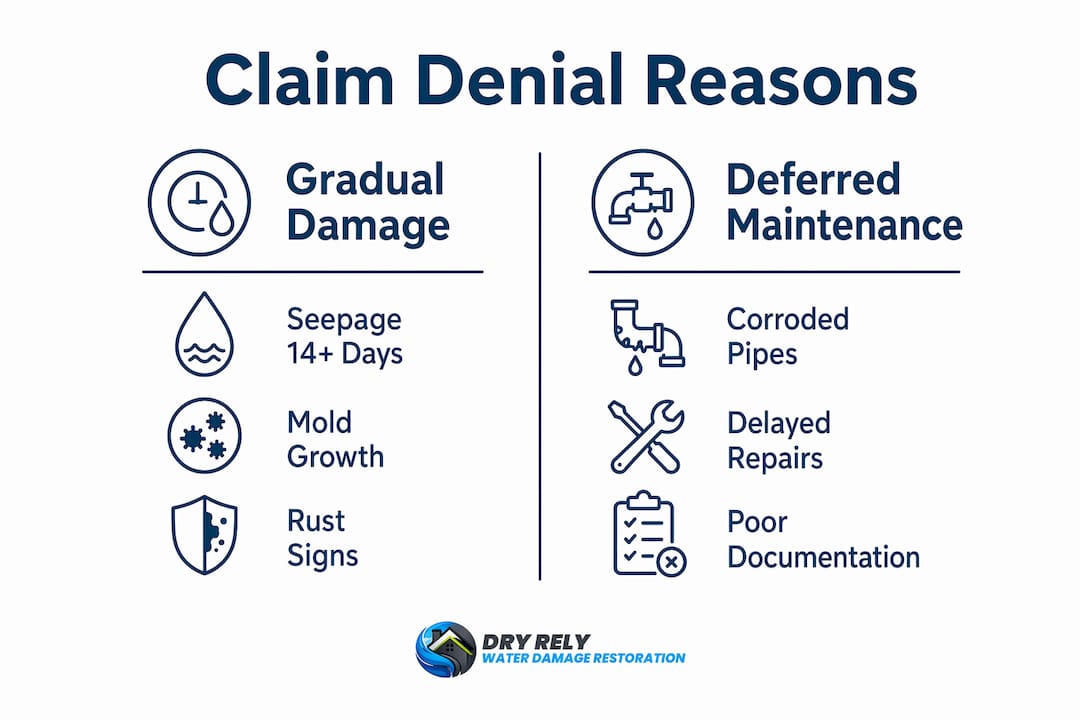
Water damage claim rejection almost always traces back to one of two policy exclusions: gradual seepage or deferred maintenance. Standard homeowners insurance covers sudden and accidental damage. It does not cover damage that built up over time because the homeowner could have caught it earlier. Insurers draw this line using physical evidence, not guesswork.
The 14-day rule is the most important threshold to understand. Any leak that persisted for two weeks or longer falls outside standard coverage. Adjusters treat this rule as a bright line. Cross it, and your claim faces serious risk of denial.
Insurers also look at biological and structural markers to establish how long water was present. Mold growth, rust, and calcification act as biological clocks. Each one tells an adjuster roughly how long moisture was active before you reported it. A sudden pipe burst leaves fresh water with no rust or mold. A slow leak behind a wall for three months leaves staining, calcified mineral deposits, and active mold colonies.
How insurers tell sudden damage from gradual damage
The distinction between sudden and gradual damage is the central question in most denied water damage claims. Insurers train adjusters to look for specific physical evidence at the loss site.
Signs that support a sudden damage classification:
- Fresh water with no discoloration or odor
- No mold growth on adjacent surfaces
- No rust or mineral deposits on the pipe or fixture
- Clean drywall with no staining behind the wet area
- A clear triggering event, such as a frozen pipe or appliance failure
Signs that point to gradual seepage:
- Active mold colonies on walls, insulation, or framing
- Rust streaks or calcified buildup on pipes and fixtures
- Warped or buckled flooring from prolonged moisture exposure
- Multiple layers of water staining on drywall or ceilings
- No identifiable sudden event in the homeowner's account
Courts have confirmed that disputes over leak timelines are triable factual issues. Insurers cannot simply point to a broad exclusion and close the file. They must investigate. That means you have real grounds to push back when a denial feels unjustified.
Pro Tip: Take timestamped photos within the first hour of discovering any leak. Fresh evidence with no mold or rust directly counters a gradual seepage classification.
Deferred maintenance: the most common reason claims fail
Deferred maintenance is the leading cause of water damage claim rejection for homeowners who believe they did nothing wrong. Insurers deny claims when damaged components show visible neglect, such as corroded pipes, deteriorated caulk around tubs, or a water heater that was well past its service life. The policy logic is straightforward: insurance covers accidents, not predictable failures.
Common maintenance-related denial triggers include:
- Corroded or pinhole-leaking supply lines
- Cracked or missing caulk around showers, tubs, and sinks
- Water heaters beyond their rated lifespan showing rust or sediment
- Deteriorated wax rings under toilets
- Roof flashing failures that allowed water intrusion over multiple seasons
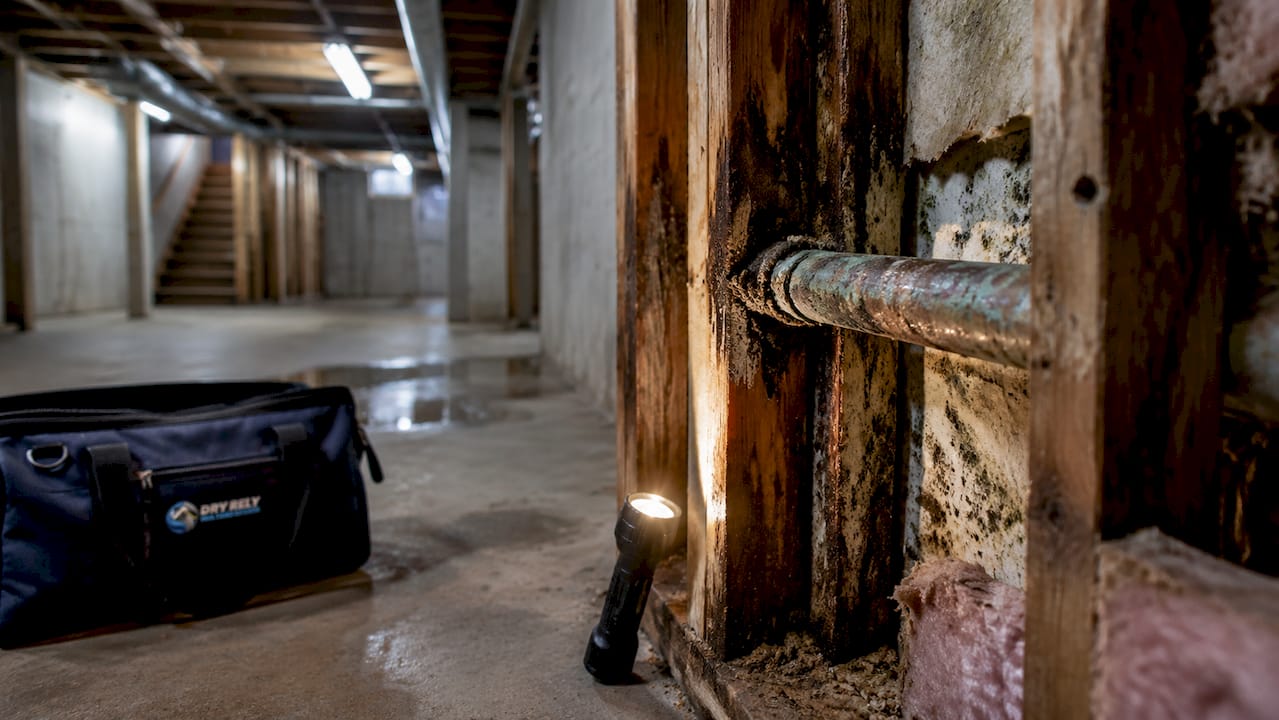
The practical problem is that many of these failures are invisible until they cause damage. A corroded pipe inside a wall looks fine from the outside. But an adjuster who sees rust on the failed section will classify it as a maintenance issue regardless of whether you knew about it.
Your best defense is documentation. Keep receipts for plumbing inspections, appliance servicing, and caulk replacement. A dated service record showing you maintained your water heater regularly is direct evidence against a deferred maintenance denial.
Pro Tip: Schedule a licensed plumber inspection once a year and keep the written report. That single document can be the difference between a paid claim and a denied one.
Other reasons water damage claims get denied
Beyond the 14-day rule and maintenance exclusions, several other factors cause water damage claim rejection that homeowners frequently overlook.
-
Mold sublimits and exclusions. Many standard policies cap mold coverage at a low dollar amount or exclude it entirely. If your water damage produced significant mold growth, the mold remediation costs may not be covered without a separate endorsement. Check your declarations page for a mold sublimit before you assume full coverage.
-
Subterranean and hydrostatic water. Water that enters your home from the ground up, through foundation walls or floor slabs, is typically excluded from standard homeowners policies. This type of damage requires separate flood insurance, usually through the National Flood Insurance Program. Confusing flood damage with covered water damage is a common and costly mistake. The distinction between hurricane and flood coverage matters especially in South Florida.
-
Late reporting. Delayed reporting is one of the fastest ways to void or reduce a claim. Timely documentation with timestamps and a plumber's report gives you the strongest possible position. Waiting days or weeks to report a leak gives the insurer grounds to argue the damage worsened due to your inaction.
-
Sewage and drain backups. Standard policies often exclude damage from water that backs up through drains or sewers. This coverage requires a specific rider. Many homeowners discover this gap only after filing a claim.
-
Vacancy clauses. If your property was unoccupied for more than 30 or 60 days, depending on your policy, coverage for water damage may be suspended. This catches landlords and seasonal homeowners off guard.
How to dispute a denied water damage claim
A denial letter is not the end of the process. Knowing how to appeal a claim denial gives you real options, and the evidence you gather in the first 48 hours is your most powerful tool.
Start by requesting a written explanation that defines the exact policy language the insurer used to deny your claim. Ask them to define the physical boundary between the excluded source of damage and any resulting damage that may still be covered. This matters because many policies include "ensuing loss" language. Even if the pipe itself is excluded as a maintenance failure, the water damage to your floors and walls may still qualify for coverage.
Next, get a licensed plumber to inspect the failed component and produce a written report. A plumber's dated report that labels the failure as sudden or abrupt, combined with timestamped photos showing no mold or rust, carries significant weight with reviewers and can shift the outcome in your favor.
Additional steps to strengthen your dispute:
- Submit your own water damage documentation with dates, photos, and a written timeline of events
- Request the adjuster's full inspection notes and photo log under your state's claims handling regulations
- Ask specifically whether "ensuing loss" coverage applies to secondary damage even if the source is excluded
- File a complaint with your state's Department of Insurance if the insurer refuses to investigate adequately
Homeowners accept partial denials too readily. Insisting on a detailed explanation of each excluded item often reveals coverage that was incorrectly denied. Persistence pays.
Key Takeaways
Water damage claim denial most often results from gradual seepage, deferred maintenance, or late reporting, all of which are preventable with proper documentation and prompt action.
| Point | Details |
|---|---|
| The 14-day rule controls most denials | Leaks lasting two weeks or more are excluded as gradual seepage under standard policies. |
| Physical evidence determines timelines | Mold, rust, and calcification tell adjusters how long water was present before reporting. |
| Maintenance records protect your claim | Dated service receipts counter deferred maintenance denials from insurers. |
| Ensuing loss language may save partial coverage | Secondary damage to floors and walls may be covered even when the source pipe is excluded. |
| A plumber's report is your strongest dispute tool | A licensed plumber's written finding of sudden failure can reverse a gradual seepage denial. |
What 15,000 restored properties taught us about claim denials
The most consistent pattern we see at Dry Rely Water Damage Restoration is not the damage itself. It is the gap between when the leak started and when the homeowner called anyone. That gap is where most claims die.
Homeowners wait because they hope the problem is minor. They wipe up water, put down towels, and check again in the morning. By the time they call a plumber, mold has started. By the time they call their insurer, the adjuster sees biological evidence of a weeks-old leak. The claim gets denied, and the homeowner is left paying out of pocket for damage that a same-day call would have covered.
The second pattern is accepting the first denial without reading the exclusion language carefully. Insurers are not always wrong, but they are not always right either. Courts have reversed denials where insurers failed to investigate adequately before citing gradual seepage. You have the right to push back, and a well-documented dispute with a plumber's report and timestamped photos gives you real leverage.
The third thing we have learned is that professional mitigation documentation does double duty. When our team responds within 60 minutes and uses thermal imaging to map moisture, that report becomes part of your claim file. It shows the insurer exactly where water traveled, when it was found, and what condition the structure was in at the time of discovery. That kind of objective, dated evidence is harder to dismiss than a homeowner's account alone.
Do not accept a denial as final until you have read every exclusion, requested every inspection note, and obtained an independent plumber's assessment. The process is worth the effort.
— Dry Rely Water Damage Restoration
When professional restoration supports your claim
Getting water out fast is not just about protecting your home. It directly affects your claim outcome.
Dry Rely Water Damage Restoration puts certified technicians on-site within 60 minutes across South Florida. The team uses thermal imaging to locate hidden moisture and produces a detailed, timestamped mitigation report that documents conditions at the time of response. That report becomes part of your claim file and gives your insurer objective evidence of when damage was discovered and how far it had spread. For homeowners dealing with a denial or a complex claim, professional water damage restoration paired with thorough documentation is the most direct path to a fair outcome. If mold is already present, the team also provides mold removal and remediation to address what standard policies often sublimit or exclude.
FAQ
What is the most common reason for water damage claim denial?
The most common reason is classifying damage as gradual seepage lasting 14 days or more, which standard homeowners policies exclude. Adjusters use mold, rust, and calcification as physical evidence to establish that timeline.
Can I dispute a denied water damage claim?
Yes. Request the insurer's written explanation and inspection notes, then obtain a licensed plumber's report documenting the failure as sudden. Courts have ruled that gradual versus sudden leak disputes are triable factual issues, not automatic denials.
Does homeowners insurance cover mold from water damage?
Most standard policies either cap mold coverage at a low sublimit or exclude it entirely. You typically need a separate mold endorsement to cover full remediation costs.
What does "ensuing loss" mean in a water damage policy?
Ensuing loss language allows coverage for secondary damage, such as flooring and drywall, even when the source of water, such as a corroded pipe, is excluded as a maintenance failure. Always ask your insurer whether this provision applies to your claim.
How quickly should I report water damage to my insurer?
Report within 24 hours of discovery. Late reporting gives insurers grounds to argue the damage worsened due to your inaction, which can reduce or void your claim. Take timestamped photos immediately and contact a restoration professional the same day.