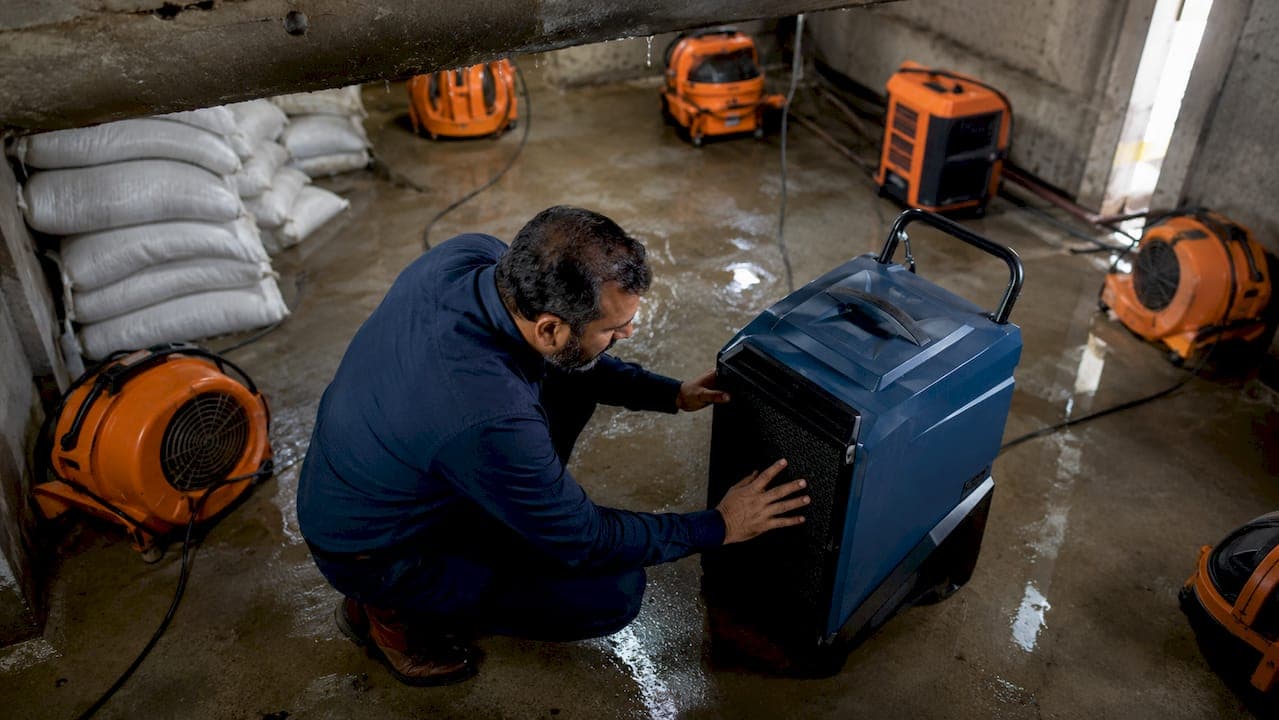
Business loss mitigation for water damage is defined as the immediate, coordinated process of stopping water intrusion, drying affected structures, and documenting losses to protect both your property and your bottom line. The industry term is "water damage mitigation," and it covers everything from the first emergency response to final insurance settlement. Every hour you delay, secondary damage compounds. Secondary damage can cost up to ten times more than the initial incident if not addressed promptly. This guide gives you the exact tools, steps, and documentation practices to minimize financial and operational losses when water hits your commercial property.
What tools and preparations support business loss mitigation for water damage?
Effective water damage mitigation starts before an incident occurs. The right equipment and pre-loss planning determine how fast you can stop the bleeding when a pipe bursts or a roof fails.
Critical equipment every commercial property should have access to:
- Moisture meters: These measure water content inside walls, floors, and ceilings. Surface dryness is not the same as structural dryness.
- Thermal imaging cameras: Psychrometrics and thermal imaging detect hidden moisture that visual inspection misses entirely. A wall can look dry and still harbor active moisture driving mold growth.
- Air movers and desiccant dehumidifiers: Industrial air movers accelerate evaporation. Desiccant dehumidifiers pull moisture from the air even in low-temperature environments, which is critical in South Florida's humid climate.
- Water extraction units: Truck-mounted or portable extractors remove bulk standing water before structural drying begins.
Pre-loss planning is equally critical. Keep building blueprints accessible and mark all water shut-off locations. Review your insurance policy annually to confirm covered perils, flood endorsements, and business interruption insurance waiting periods. Know your policy limits before you need them.
Pro Tip: Register your property with a certified restoration company before any incident occurs. Many providers maintain commercial profiles that allow them to pre-authorize access, pull blueprints, and dispatch faster. That pre-registration can cut your initial response time significantly.
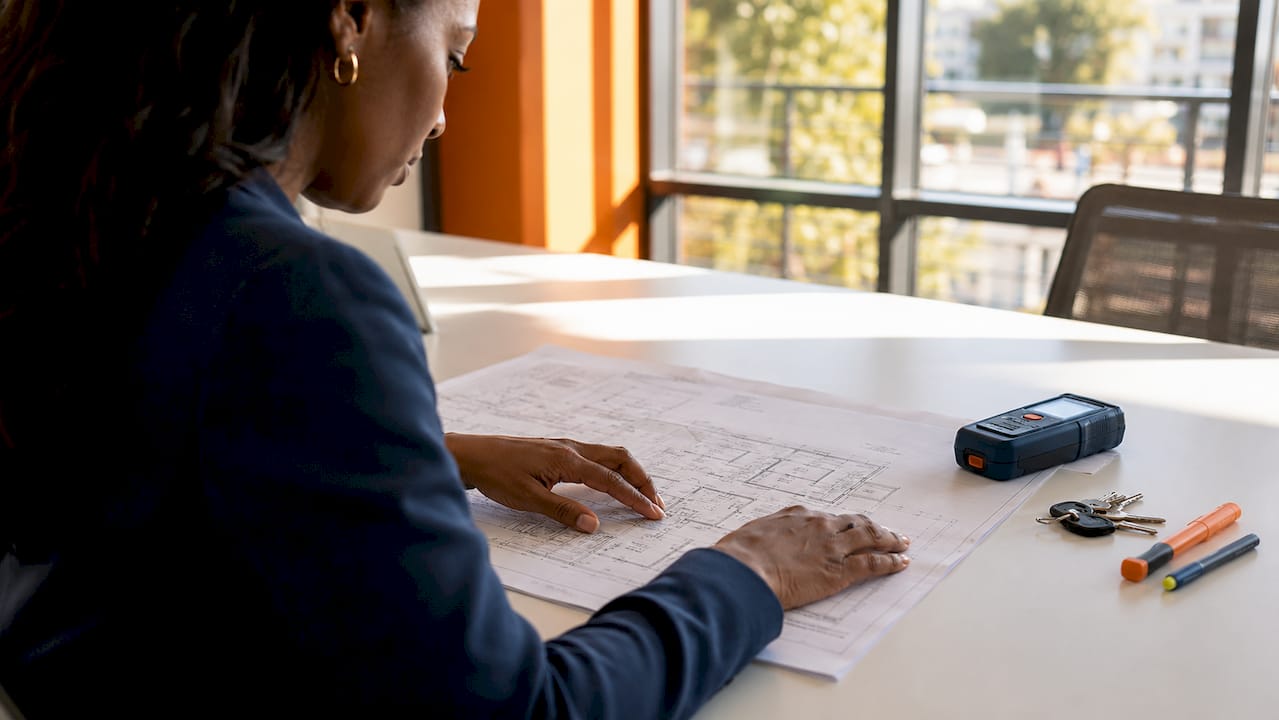
Understanding commercial water damage prevention also reduces the likelihood you will need emergency mitigation at all.
How do you execute water damage recovery step by step?
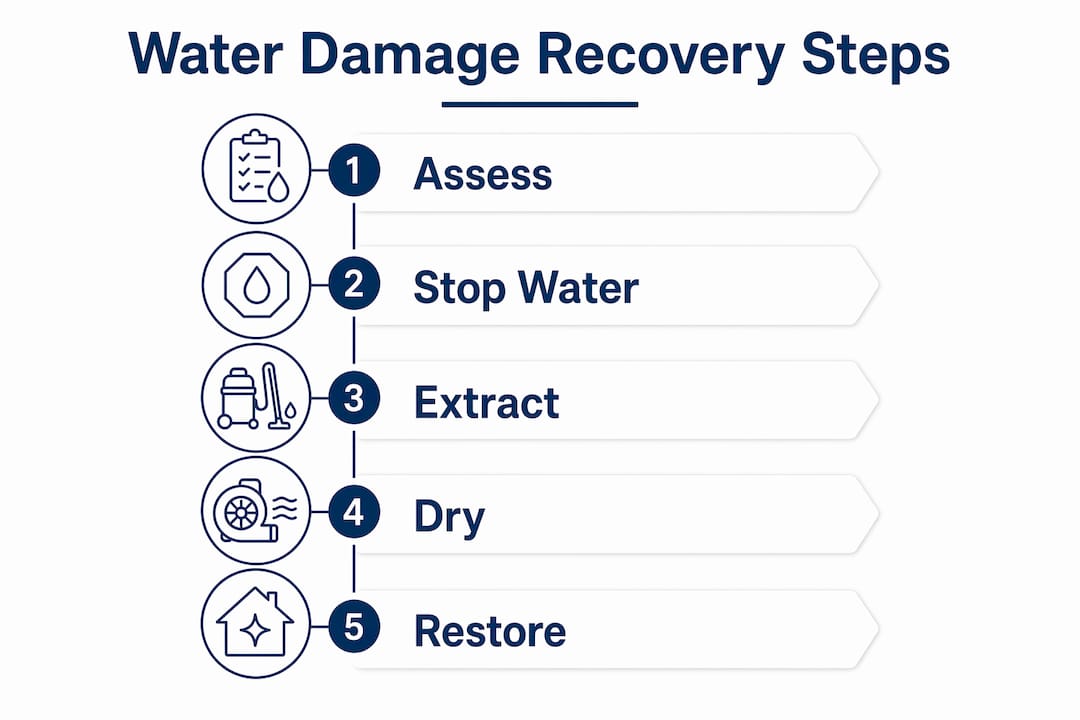
Speed and sequence both matter. Skipping a step does not save time. It creates a larger problem that costs more to fix.
- Shut off the water source. Locate the main shut-off valve immediately. If the source is a municipal supply line or storm intrusion, contact your utility provider and document the time of the call.
- Document initial conditions. Before touching anything, photograph and video every affected area. Capture water lines on walls, wet flooring, and any visible structural damage. This documentation is your first line of defense in an insurance claim.
- Remove bulk water. Professional water extraction services use truck-mounted extractors to pull standing water from floors and subfloors. Do not rely on wet vacuums for large commercial losses.
- Begin structural drying. Place air movers and dehumidifiers according to a drying plan based on moisture meter readings. Track equipment placement and humidity readings in a daily log.
- Stabilize the environment. Mold growth can begin within 24–48 hours in humid commercial environments. Maintaining relative humidity below 60% is the target during the drying phase.
- Coordinate tenant and staff access. In multi-tenant buildings, failed coordination of tenant access and communications prolongs downtime and often makes indirect costs worse than the physical damage itself. Post clear signage, communicate timelines in writing, and assign a single point of contact for all tenant questions.
- Engage professional restoration management. Professional restoration requires project management infrastructure, not just labor. A certified team tracks drying progress, adjusts equipment, and produces the documentation your insurer requires.
"The primary goal of mitigation is to stop the loss, not just repair the structure. Every hour of operational downtime is a financial loss that compounds alongside the physical damage."
Understand the full restoration process before an emergency so your team knows what to expect at each phase.
How to document water damage for insurance claims
Documentation is the difference between a paid claim and a denied one. Timing matters as much as thoroughness.
Document before you clean up anything. Adjusters cannot verify damage they did not see. Your photos and videos taken in the first hour carry more weight than any report written after the fact.
What to record:
- Time-stamped photos and videos of all affected areas
- Moisture mapping reports generated by your restoration team
- Equipment placement logs showing which units ran, where, and for how long
- Written communication records with tenants, contractors, and your insurer
- Receipts for all emergency expenses including temporary repairs and lodging for displaced tenants
Lack of detailed moisture mapping and equipment logs is one of the most common reasons claims are denied or reduced. Adjusters prioritize rigorous documentation. Missing records give them grounds to dispute your loss amount.
Business interruption insurance adds another layer of complexity. Standard business interruption coverage pays for income lost due to direct physical damage from a covered peril. Flood damage is excluded from most commercial property policies unless you carry a separate flood endorsement. Review your policy now, not after the water is already in your building.
Business interruption policies commonly carry a 48–72 hour waiting period before coverage activates. You are responsible for all costs during that window. Plan your cash reserves accordingly.
Pro Tip: For losses exceeding $50,000, consider hiring a public adjuster. Public adjusters work for you, not the insurer, and they specialize in maximizing claim settlements. Their fee is typically a percentage of the final settlement, and the net recovery often exceeds what you would receive negotiating alone.
Common mistakes in flood damage management and how to fix them
The most expensive mistakes in water damage recovery are not dramatic. They are quiet failures that compound over days.
Mistakes that cost businesses the most:
- Delayed response. Waiting even 12 hours before beginning extraction allows water to wick into wall cavities, subfloors, and insulation. What starts as a surface problem becomes a structural one.
- Insufficient drying. Pulling equipment too early because surfaces feel dry is a critical error. Surface dryness does not guarantee complete dryness. Hidden moisture drives mold growth that surfaces weeks later as a far more expensive remediation project.
- Poor documentation. Cleaning up before photographing damage is the single fastest way to lose an insurance claim. Train your facilities team to document first, clean second.
- Insurance coverage gaps. Many property managers assume their commercial policy covers floods. Flood damage requires a separate endorsement or standalone flood insurance policy. Discovering this gap after a loss is too late.
- No cash reserves for waiting periods. Businesses frequently underestimate the need for cash reserves during the mandatory 48–72 hour waiting period before business interruption coverage activates. That gap can strain payroll and vendor payments.
Troubleshooting mold after the fact is far more disruptive than preventing it. If you suspect hidden moisture after drying is complete, schedule a thermal imaging scan before closing walls. The cost of one scan is a fraction of a full mold remediation project.
Continuous monitoring during restoration is not optional. Assign someone to check equipment readings daily and report deviations. A dehumidifier that fails overnight can undo two days of drying progress.
Key Takeaways
Effective business loss mitigation for water damage requires immediate extraction, continuous environmental monitoring, and thorough documentation to protect both your property and your insurance claim.
| Point | Details |
|---|---|
| Act within the first hour | Delayed extraction allows water to penetrate structural cavities, multiplying repair costs. |
| Use thermal imaging | Surface dryness does not confirm complete dryness; thermal scans detect hidden moisture before mold starts. |
| Document before cleanup | Time-stamped photos and moisture mapping reports are the foundation of any successful insurance claim. |
| Know your policy gaps | Flood damage requires a separate endorsement; standard commercial policies do not cover it. |
| Maintain cash reserves | Business interruption insurance has a 48–72 hour waiting period; you fund all costs during that window. |
What I have learned managing commercial water losses
After working through dozens of commercial water damage events, the pattern is consistent. The businesses that recover fastest are not the ones with the most money. They are the ones with a plan already in place.
The biggest mindset shift I have seen is treating water damage mitigation as a business continuity issue, not a property repair issue. The moment water enters your building, the clock on your revenue loss starts. Structural repairs can wait a few days. Operational downtime cannot.
Proactive documentation is the single habit that separates businesses that get paid on their claims from those that fight for months. I have watched property managers lose six-figure claims because they cleaned up before photographing damage. The insurer did not dispute the damage happened. They disputed the extent. Without documentation, you cannot prove what you lost.
The other lesson is about partnerships. Establishing a relationship with a certified restoration company before an incident changes everything. You skip the search process during a crisis. You get faster dispatch. You get a team that already knows your building layout. That pre-existing relationship is worth more than any single piece of equipment you could stockpile.
Treat mitigation as a standing business process, not an emergency reaction. Review your insurance policy every year. Run a shut-off valve drill with your facilities team. Keep a documentation checklist in your emergency binder. The businesses that do this do not eliminate water damage. They just stop it from becoming a financial catastrophe.
— Prime
How Dryrelywaterdamagerestoration supports your water damage recovery
When water hits your commercial property, you need a team on-site fast. Dryrelywaterdamagerestoration guarantees technicians on-site within 60 minutes anywhere in South Florida. The certified team uses thermal imaging for leak detection, industrial-grade extraction equipment, and full documentation protocols that support your insurance claim from the first hour.
Dryrelywaterdamagerestoration has restored over 15,000 properties and holds a 4.9-star rating from over 200 verified reviews. The team handles both immediate emergency water damage response and the full restoration process, including mold prevention and structural drying. For commercial properties in South Florida, explore professional restoration services or call for an immediate assessment and pre-loss planning consultation.
FAQ
What is business loss mitigation for water damage?
Business loss mitigation for water damage is the process of stopping water intrusion, extracting standing water, drying structures, and documenting losses to minimize financial and operational damage. The goal is to reduce downtime and protect insurance claims, not just repair physical damage.
How fast does mold grow after water damage in a commercial building?
Mold growth can begin within 24–48 hours in humid commercial environments. Maintaining relative humidity below 60% during the drying phase is the standard control measure.
Does business interruption insurance cover flood damage?
Standard business interruption insurance covers income lost from direct physical damage caused by covered perils. Flood damage is excluded from most commercial policies unless you carry a separate flood endorsement or standalone flood insurance.
What documentation do I need for a water damage insurance claim?
You need time-stamped photos and videos taken before cleanup, moisture mapping reports, equipment usage logs, and written communication records with your insurer and contractors. Missing any of these can result in a denied or reduced claim.
When should I hire a professional restoration company instead of handling it myself?
Hire a professional restoration company immediately for any commercial water loss. Professional mitigation typically costs a fraction of the potential total loss, and certified teams provide the documentation, equipment, and project management that self-managed responses cannot match.