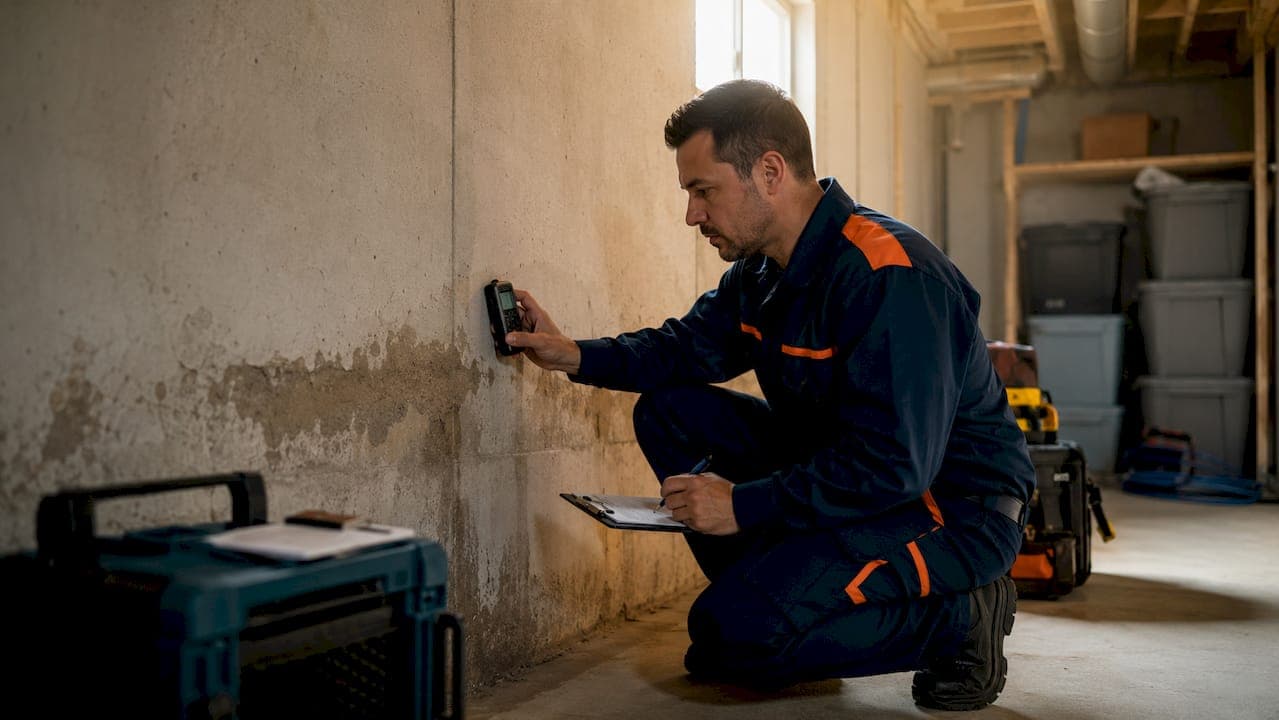
Damage assessment in water restoration is defined as a systematic evaluation of water intrusion sources, moisture levels, and affected materials to prescribe the correct remediation plan. Knowing how restoration technicians assess damage gives you the power to ask the right questions, verify the work being done, and protect your property from secondary problems like mold. Certified technicians follow industry standards such as IICRC S500 and use instruments like moisture meters, hygrometers, and infrared cameras to find both visible and hidden moisture before a single piece of equipment is placed. Dry Rely Water Damage Restoration has applied this structured approach across more than 15,000 properties in South Florida, and the process works because it leaves nothing to guesswork.
How restoration technicians assess damage: tools and moisture mapping
The first thing a technician does on arrival is locate the water source and map where moisture has traveled. Visible damage is often just the surface; hidden moisture inside walls, under flooring, and behind baseboards defines the true scope of the job.
Technicians rely on three core instruments for this work:
- Moisture meters measure the moisture content of wood, drywall, and concrete at the surface and at depth. Readings above the material's normal range confirm active saturation.
- Hygrometers record relative humidity and temperature in each room. High ambient humidity signals that moisture is still evaporating from building materials into the air.
- Infrared cameras detect temperature differences on wall and ceiling surfaces. Wet materials hold temperature differently than dry ones, making hidden pockets of moisture visible without cutting into walls.
Technicians gather readings at multiple points across every affected room, inside wall cavities, behind baseboards, and through insulation layers. This process is called moisture mapping, and it produces a wet-to-dry profile of the entire affected area. That profile tells the team exactly what to demolish, what to dry in place, and where to position drying equipment for maximum effect.
Pro Tip: Ask your technician to show you the moisture map before drying begins. A legitimate assessment produces a written or digital record of every reading location, not just a verbal summary.
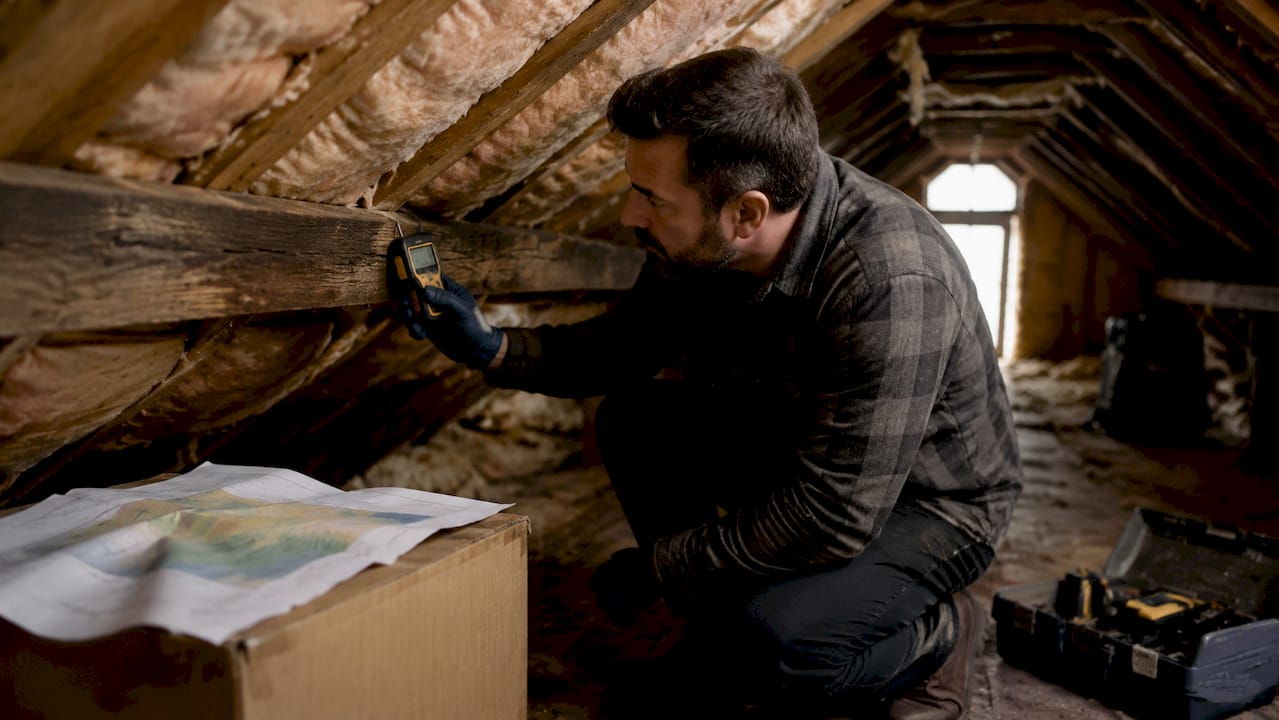
Professional-grade instruments matter because consumer-level tools miss moisture at depth. A technician using a calibrated pin-type moisture meter on a subfloor will catch saturation that a basic surface reader ignores entirely. That missed reading is how mold starts growing two weeks after a job appears finished.
How do technicians classify water damage severity and contamination?
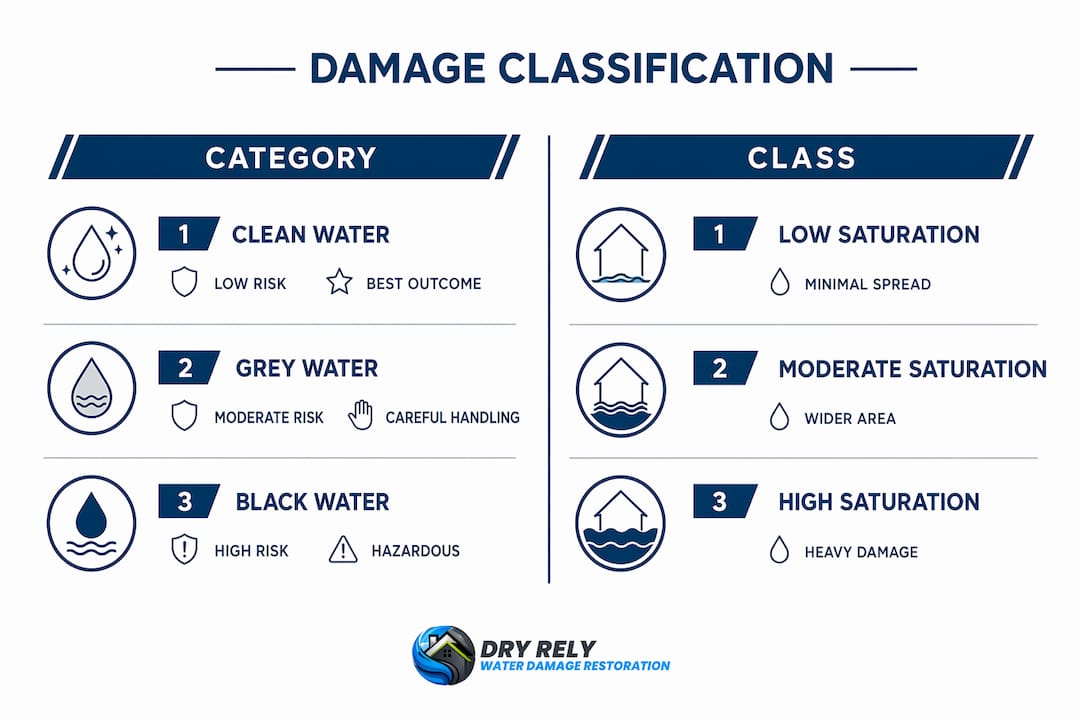
Classification determines the entire remediation approach. Technicians use the IICRC S500 standard to assign every job two labels: a water category and a water class.
The water category describes the contamination level of the source water. The water class describes how far saturation has spread and how deeply materials are affected.
| Label | Definition | Restoration impact |
|---|---|---|
| Category 1 (clean water) | Water from a clean supply line or rain with no contaminants | Standard drying; no special PPE required |
| Category 2 (gray water) | Water from appliances, dishwashers, or washing machines with mild contamination | Antimicrobial treatment; limited PPE |
| Category 3 (black water) | Sewage, floodwater, or heavily contaminated sources | Full containment, PPE, and professional handling required |
| Class 1 | Minimal absorption; only part of a room affected | Fewer drying units; faster drying time |
| Class 2 | Entire room affected; moisture in walls up to 24 inches | More equipment; longer drying cycle |
| Class 3 | Saturation in ceilings, walls, and insulation throughout | Maximum equipment; possible demolition |
| Class 4 | Specialty drying needed for dense materials like hardwood or concrete | Low-grain refrigerant dehumidifiers; extended timeline |
The EPA's mold remediation guidance reinforces this framework by requiring technicians to assess contamination level before deciding on PPE and containment. Category 3 water, such as sewage backup, requires full protective equipment and containment barriers because pathogens are present. Category 1 water from a burst supply line carries no such risk, but it can become Category 2 within 24–48 hours if left standing.
Contaminated water assessment is a primary risk management decision, not just a paperwork step. Getting the category wrong means either under-protecting workers and occupants or over-spending on unnecessary containment.
Why is ongoing moisture monitoring critical during drying?
Drying is not finished when surfaces feel dry to the touch. Structural drying requires daily moisture monitoring until readings return to pre-loss baseline levels, which are the normal moisture content values for that material in that climate.
Technicians track three data points every day during the drying phase:
- Material moisture content from meter readings at each mapped location
- Relative humidity in each affected room, measured by hygrometer
- Psychrometric data, including temperature and dew point, to confirm the drying environment is pulling moisture out of materials efficiently
Psychrometric measurements guide equipment placement. If the dew point inside a room is too high, a dehumidifier is repositioned or upgraded. If airflow is insufficient, additional air movers are added. Missing this data leads to misjudged drying status, which is the most common cause of post-restoration mold growth.
Hidden moisture drives post-restoration mold in cases where drying was declared complete based on appearance rather than instrument readings. Mold can begin colonizing within 24–48 hours on wet organic materials like drywall and wood framing. Daily monitoring closes that window by catching moisture that has not yet reached the surface.
The restoration process steps for drying a South Florida home also account for the region's high ambient humidity. Outdoor air in South Florida carries significant moisture year-round, which means drying equipment must work harder and longer than in drier climates. Technicians adjust their psychrometric targets accordingly.
How do technicians document findings and create restoration plans?
Documentation is the backbone of every professional restoration job. Without it, you have no way to verify that drying was completed correctly, and your insurance claim has no supporting evidence.
A complete assessment report includes the following:
- Photographs of all affected areas taken at the start of the job, during drying, and at completion. Photos capture visible damage that readings alone cannot convey.
- Moisture readings log recording every meter reading by location and date. This log proves that drying progressed and that baseline was reached.
- Water category and class assignment with the rationale for each classification decision.
- Equipment placement records showing which drying units were used, where they were positioned, and when they were adjusted.
- Remediation action plan listing what materials will be removed, what will be dried in place, and what follow-up steps are required.
Assessment documentation compiled into detailed reports serves three purposes: it guides the remediation team, it supports insurance claims, and it creates an audit trail if disputes arise later. A technician who cannot produce a written moisture log is not following industry standards.
Dry Rely Water Damage Restoration provides full documentation packages to every client, including photo records and moisture logs formatted for insurance submission. This is not optional. It is part of what a professional assessment looks like. For property managers handling water damage claims documentation, having this paperwork ready from day one shortens the claims process significantly.
Key Takeaways
A professional damage assessment is defined by instrument-verified moisture data, IICRC S500 classification, and written documentation, not by visual inspection alone.
| Point | Details |
|---|---|
| Moisture mapping is the foundation | Technicians measure multiple locations to build a wet-to-dry profile before placing any equipment. |
| Classification drives the entire plan | IICRC S500 water category and class determine PPE, equipment type, and remediation approach. |
| Daily monitoring prevents mold | Readings must reach pre-loss baseline, not just feel dry, before drying is declared complete. |
| Psychrometric data guides equipment | Temperature, relative humidity, and dew point readings direct dehumidifier and air mover placement. |
| Documentation protects you | A complete moisture log and photo record supports insurance claims and verifies quality of work. |
What most homeowners get wrong about damage assessment
After working with more than 15,000 properties across South Florida, the Dry Rely Water Damage Restoration team has seen one pattern repeat itself constantly. Homeowners assume the job is done when the floors feel dry and the walls look normal. That assumption costs people thousands of dollars in mold remediation six weeks later.
The most important thing you can do is ask your technician for the moisture map before drying begins. Ask what water category and class was assigned and why. Ask how often readings will be taken and what baseline number they are targeting. These are not difficult questions, and any certified technician should answer them without hesitation. If they cannot, that is a signal worth paying attention to.
The other misconception I see regularly is that visible damage equals total damage. A flooded bathroom with no visible wall staining can have saturated insulation and wet framing behind the tile. Infrared imaging catches that. A visual inspection does not. The homeowner's guide to restoration explains this well, but the short version is this: trust the instruments, not the appearance.
IICRC S500-aligned monitoring and verification reduces restoration failures because it replaces guesswork with documented proof. That proof protects you during the insurance process and gives you confidence that the job was done right.
— Dry Rely Water Damage Restoration
Dry Rely Water Damage Restoration's approach to damage assessment
When water damage hits your property, the first 60 minutes determine how much of your home or building can be saved. Dry Rely Water Damage Restoration guarantees technicians on-site within 60 minutes, certified and equipped with moisture meters, hygrometers, and thermal imaging cameras to begin a full structured assessment immediately.
Every Dry Rely assessment follows IICRC S500 standards, produces a complete moisture map, and delivers written documentation ready for your insurance adjuster. From water damage restoration in South Florida to emergency response for active flooding, the team handles every category and class of water damage with the same documented, instrument-verified process. Call Dry Rely Water Damage Restoration today and get a certified technician to your door fast.
FAQ
What does a water damage assessment include?
A water damage assessment includes identifying the water source, measuring moisture levels in all affected materials, classifying water category and class per IICRC S500, and documenting findings in a written report with photographs and moisture readings.
How do technicians find hidden moisture?
Technicians use infrared cameras to detect temperature differences on surfaces and moisture meters to measure saturation at depth inside walls, floors, and ceilings. These instruments locate moisture that visual inspection misses entirely.
What is the IICRC S500 standard?
IICRC S500 is the professional standard for water damage restoration that defines water categories by contamination level and water classes by saturation extent. Technicians use it to determine the correct equipment, PPE, and remediation protocol for every job.
When is drying considered complete?
Drying is complete when moisture readings reach pre-loss baseline levels at every mapped location, not when surfaces feel dry. Daily monitoring with moisture meters and psychrometric data confirms when that threshold is met.
Why does water category matter for my safety?
Category 3 water from sewage or floodwater contains pathogens that require full PPE and containment barriers. The EPA recommends professional handling for contaminated water because exposure without proper protection creates serious health risks for occupants and workers.