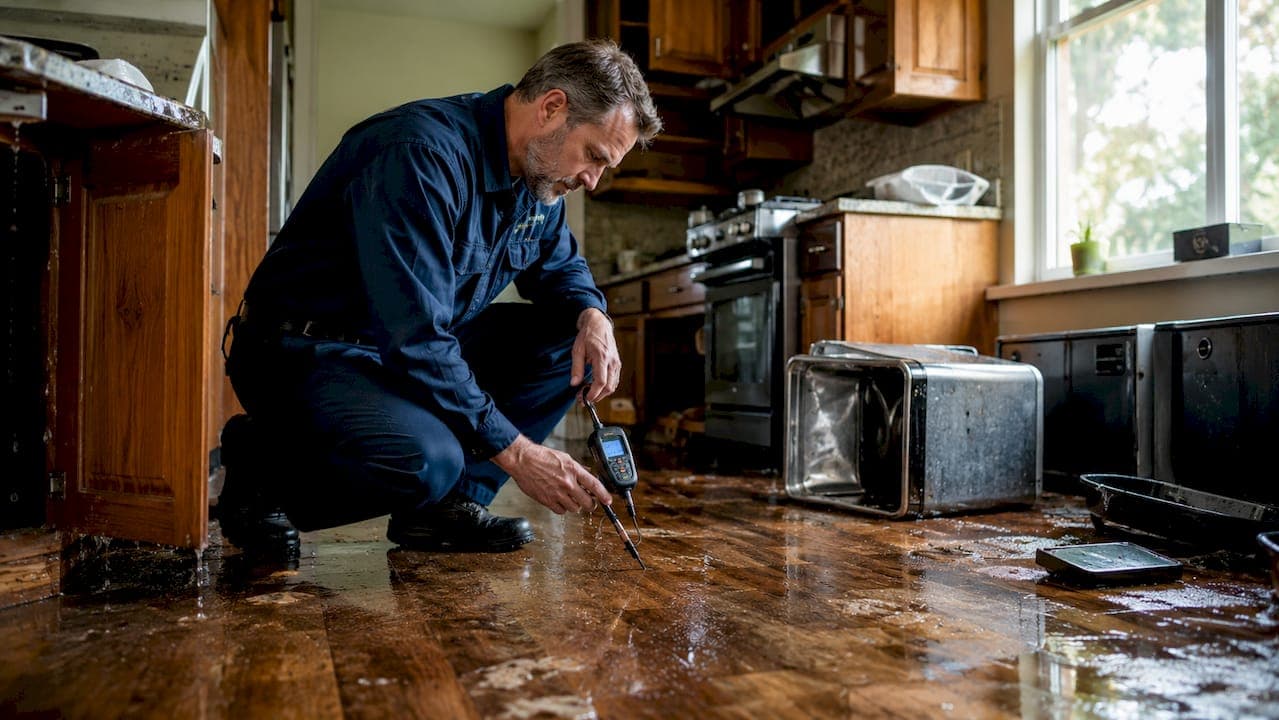
Water damage restoration is the process of cleaning, drying, sanitizing, and repairing a property after water intrusion to return it to its pre-loss condition. The industry term for this work is "property restoration," and it covers everything from the first emergency call to the final coat of paint on rebuilt drywall. What is water damage restoration in practical terms? It is a two-phase process: mitigation stops the damage from spreading, and restoration repairs what was lost. Skipping either phase or delaying action turns a manageable problem into a structural crisis. Dryrelywaterdamagerestoration has handled over 15,000 properties across South Florida, and the pattern is always the same. Speed and method determine the outcome.
What is water damage restoration and how does it work?
Water damage restoration is defined as a multi-step recovery process that addresses both the immediate water intrusion and the long-term structural and health consequences it causes. The process uses specialized equipment including truck-mounted extractors, industrial dehumidifiers, air movers, moisture meters, and thermal imaging cameras. Each tool serves a specific function at a specific stage. Restoration is not a single event. It is a sequence of decisions made by certified technicians who monitor conditions daily until the structure meets drying goals.
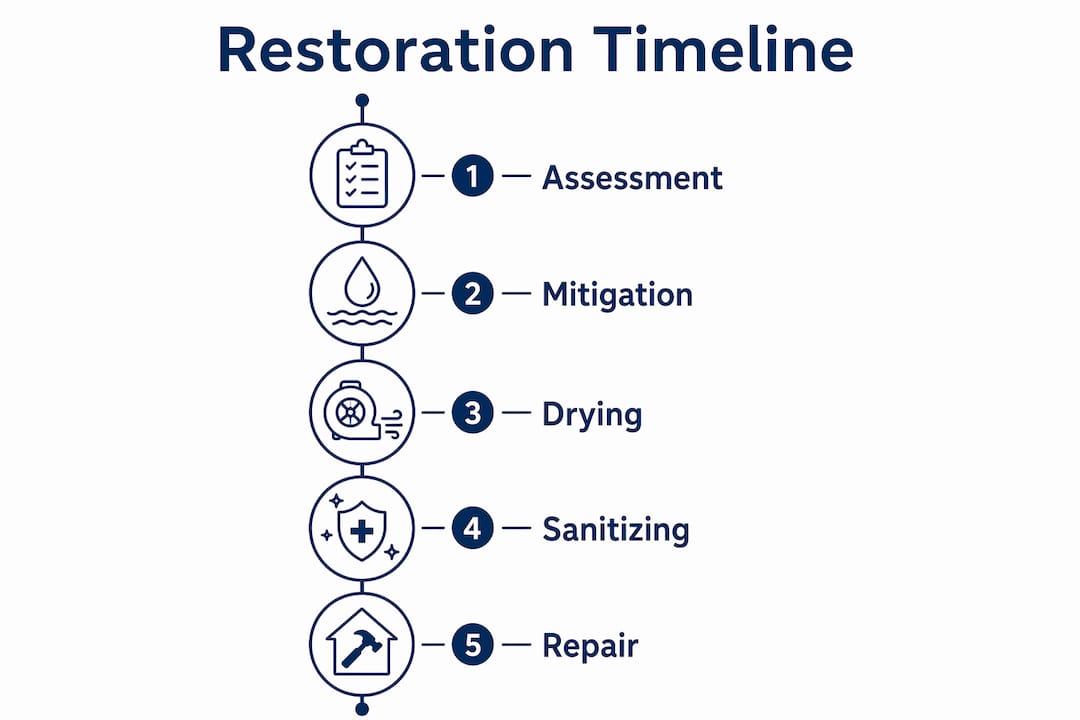
The full restoration process follows a clear sequence that every reputable firm uses. Understanding each step helps you know what to expect and what questions to ask.
-
Inspection and moisture mapping. Technicians use moisture meters and thermal imaging to locate all affected areas, including inside wall cavities and under flooring. This step produces a moisture map that guides every decision that follows.
-
Water extraction. Truck-mounted or portable extractors remove standing water fast. The faster this happens, the less water absorbs into structural materials like subfloor and drywall.
-
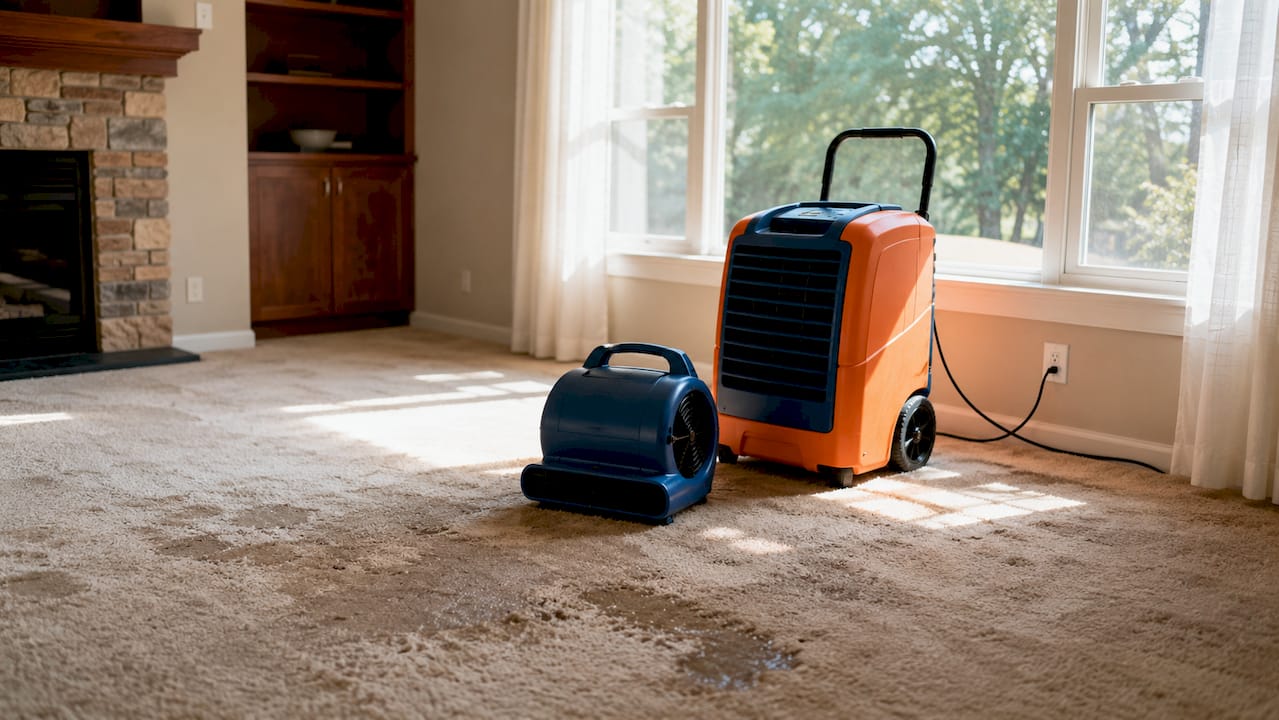
Structural drying and dehumidification. This is where most homeowners underestimate the work involved. Psychrometric control manages temperature, humidity, and airflow together rather than simply heating the room. Improper drying traps moisture inside walls, which causes mold outbreaks weeks later.
-
Cleaning and sanitizing. Antimicrobial treatments are applied to all affected surfaces. This step is non-negotiable when gray or black water is involved.
-
Repair and reconstruction. Damaged drywall, flooring, cabinetry, and insulation are removed and replaced. This phase can range from patching a single wall section to full room reconstruction.
-
Final inspection. Technicians verify that all moisture readings meet the IICRC S500 standard, which requires daily psychrometric monitoring to confirm complete drying, not just surface dryness.
Pro Tip: Ask your restoration company for daily psychrometric logs. If they cannot produce them, moisture may still be trapped inside your walls.
Timelines vary by severity. Minor damage resolves in 1–2 days; moderate cases take 3–5 days; severe or black water damage can require a week or more.
How does mitigation differ from restoration?
Restoration consists of two distinct phases: mitigation, which is the emergency response that stops damage from progressing, and restoration, which is the long-term repair and reconstruction work. Confusing the two leads homeowners to either panic unnecessarily or, more dangerously, underestimate what comes after the water is gone.
| Phase | Goal | Typical activities | Timing |
|---|---|---|---|
| Mitigation | Stop damage from spreading | Water extraction, boarding up, tarping, initial drying | First 24–48 hours |
| Restoration | Return property to pre-loss condition | Drywall replacement, flooring repair, painting, sanitizing | Days to weeks after mitigation |
Mitigation must happen within the first 24–48 hours. Mold growth begins within 24 to 48 hours after water intrusion. That window is not a guideline. It is a biological fact. Once mold establishes itself inside a wall cavity, the scope and cost of the project increase significantly.
Restoration begins only after mitigation is complete and the structure is confirmed dry. A contractor who skips straight to repairs without verifying dryness is setting you up for a mold problem inside your new walls. Reputable firms separate these phases deliberately and document each one.
Pro Tip: If a contractor offers to skip straight to drywall repair without running dehumidifiers for several days, walk away. Wet framing behind new drywall is a mold outbreak waiting to happen.
What types of water damage affect restoration safety?
Water damage falls into three categories, and the category determines how the cleanup is handled, what protective equipment technicians wear, and what materials can be saved versus discarded.
-
Clean water (Category 1). This comes from broken supply lines, overflowing sinks, or rainwater. It poses no immediate health risk. Affected materials can often be dried in place if caught quickly.
-
Gray water (Category 2). This comes from dishwashers, washing machines, or toilet overflow without solid waste. It contains biological contaminants and requires antimicrobial treatment. Porous materials like carpet padding are typically discarded.
-
Black water (Category 3). This comes from sewage backups, flooding from rivers or storm surge, and any water that has sat long enough to become heavily contaminated. Black water contains sewage, bacteria, and contaminants that pose severe health risks. Homeowners should never attempt to clean black water themselves.
The category also determines disposal requirements. Materials that absorb black water, including drywall, insulation, and carpet, are removed and disposed of as contaminated waste. Attempting to dry and save these materials is not a cost-saving measure. It is a health hazard.
South Florida properties face a specific risk: storm surge and hurricane flooding almost always qualify as black water. If your home flooded during a storm, treat it as Category 3 until a certified technician confirms otherwise.
What do water damage restoration projects typically cost?
Cost depends on four factors: the extent of the damage, the water category, the materials affected, and the labor required. Restoration for complex cases can cost up to $7 per square foot. That number climbs when black water contamination requires full material removal and disposal.
| Damage level | Estimated duration | Key cost drivers |
|---|---|---|
| Minor (small area, clean water) | 1–2 days | Extraction, drying equipment |
| Moderate (multiple rooms, gray water) | 3–5 days | Antimicrobial treatment, material removal |
| Severe (structural, black water) | 1 week or more | Full reconstruction, contaminated disposal |
Insurance coverage is a major variable. Documentation begins at the first call and requires photo evidence showing that damage was sudden and accidental rather than the result of long-term neglect. Take photos before anything is moved or removed. Record the date and time. This documentation directly affects whether your claim is approved.
Quick action also limits costs. Every hour water sits in a structure, it migrates further into framing, subfloor, and insulation. A leak caught in two hours costs far less to remediate than the same leak discovered two days later.
What should you do immediately after discovering water damage?
The first 60–120 minutes after discovering water damage are the most critical for limiting the final scope of the project. Your actions in that window directly affect both the restoration timeline and your insurance claim.
- Shut off the water source if it is safe to do so. If you cannot locate the shutoff, call your utility company immediately.
- Turn off electricity to affected areas at the breaker panel. Do not walk through standing water with live circuits nearby.
- Move pets and people out of affected rooms.
- Take photos and video of all visible damage before touching anything.
- Call a certified restoration company. Do not wait to see if things dry on their own.
- Do not use a household vacuum or fan to remove water. These tools are not designed for water extraction and can spread contamination.
Pro Tip: Learn the location of your main water shutoff before an emergency happens. In South Florida, it is usually near the water meter at the front of the property.
Recognizing signs of water damage early also prevents small leaks from becoming large restoration projects. Staining on ceilings, bubbling paint, warped flooring, and a musty smell are all indicators that moisture has been present long enough to cause structural or microbial problems. If you notice any of these signs, call for a professional assessment before the damage spreads further.
Key Takeaways
Water damage restoration is a two-phase, science-based process where speed of mitigation and precision of drying determine whether a property recovers fully or develops lasting structural and mold problems.
| Point | Details |
|---|---|
| Two distinct phases | Mitigation stops damage within 48 hours; restoration repairs and rebuilds after drying is confirmed. |
| Mold risk is immediate | Mold can begin growing within 24–48 hours, making rapid extraction non-negotiable. |
| Water category matters | Black water requires professional handling; homeowners should never attempt Category 3 cleanup. |
| Psychrometric drying is the standard | IICRC S500 requires daily moisture monitoring, not just surface drying, to prevent hidden damage. |
| Document everything early | Photos taken before cleanup begins are the foundation of a successful insurance claim. |
What I have learned from watching homeowners handle water damage
The most common mistake I see is waiting. A homeowner discovers a wet ceiling on a Friday evening, decides to monitor it over the weekend, and calls a restoration company on Monday morning. By then, mold has had 60 hours to establish itself inside the wall cavity. What would have been a two-day drying job becomes a full remediation project.
The second most common mistake is trusting surface dryness. A floor that feels dry to the touch can still hold significant moisture inside the subfloor. Without a moisture meter reading below the surface, you cannot know. This is why the IICRC S500 standard exists. It removes guesswork from the drying process by requiring daily psychrometric data.
Homeowners also underestimate how much the water category changes everything. I have seen people mop up what they thought was a washing machine overflow, only to discover the drain had backed up with gray water. The materials they saved had to be removed anyway, at greater cost and disruption than if they had called a professional immediately.
Choose a restoration firm that is IICRC certified, provides written moisture logs, and separates the mitigation invoice from the restoration invoice. That separation tells you the company understands the process. If a firm cannot explain psychrometric control or does not own thermal imaging equipment, find one that does.
— Prime
How Dryrelywaterdamagerestoration helps you recover fast
When water damage hits your South Florida property, every minute counts. Dryrelywaterdamagerestoration guarantees certified technicians on-site within 60 minutes, 24 hours a day, seven days a week. The team uses thermal imaging for leak detection, industrial extractors for fast water removal, and IICRC-compliant drying protocols to protect your structure from mold. From initial water extraction through final reconstruction, Dryrelywaterdamagerestoration manages every phase so you do not have to coordinate multiple contractors during a stressful emergency.
With over 15,000 properties restored and a 4.9-star rating from over 200 reviews, Dryrelywaterdamagerestoration delivers results you can verify. Contact the team today through the South Florida restoration services page to get a fast response and a clear recovery plan.
FAQ
What is water damage restoration in simple terms?
Water damage restoration is the process of removing water, drying the structure, sanitizing affected areas, and repairing or replacing damaged materials to return a property to its original condition. It covers both emergency response and long-term reconstruction.
How long does water damage restoration take?
Minor damage resolves in 1–2 days, moderate cases take 3–5 days, and severe or black water damage can require a week or more depending on the extent of structural involvement.
Can I restore water damage myself?
Clean water damage in a small area can sometimes be addressed by a homeowner with proper equipment. Black water and gray water damage require professional handling due to contamination and health risks.
When does mold start growing after water damage?
Mold can begin growing within 24 to 48 hours after water intrusion. This is why professional extraction and drying must begin as quickly as possible after a water event.
Does homeowners insurance cover water damage restoration?
Most homeowners insurance policies cover sudden and accidental water damage. Coverage depends on the cause and requires documentation, including photos taken before any cleanup begins, to support the claim.