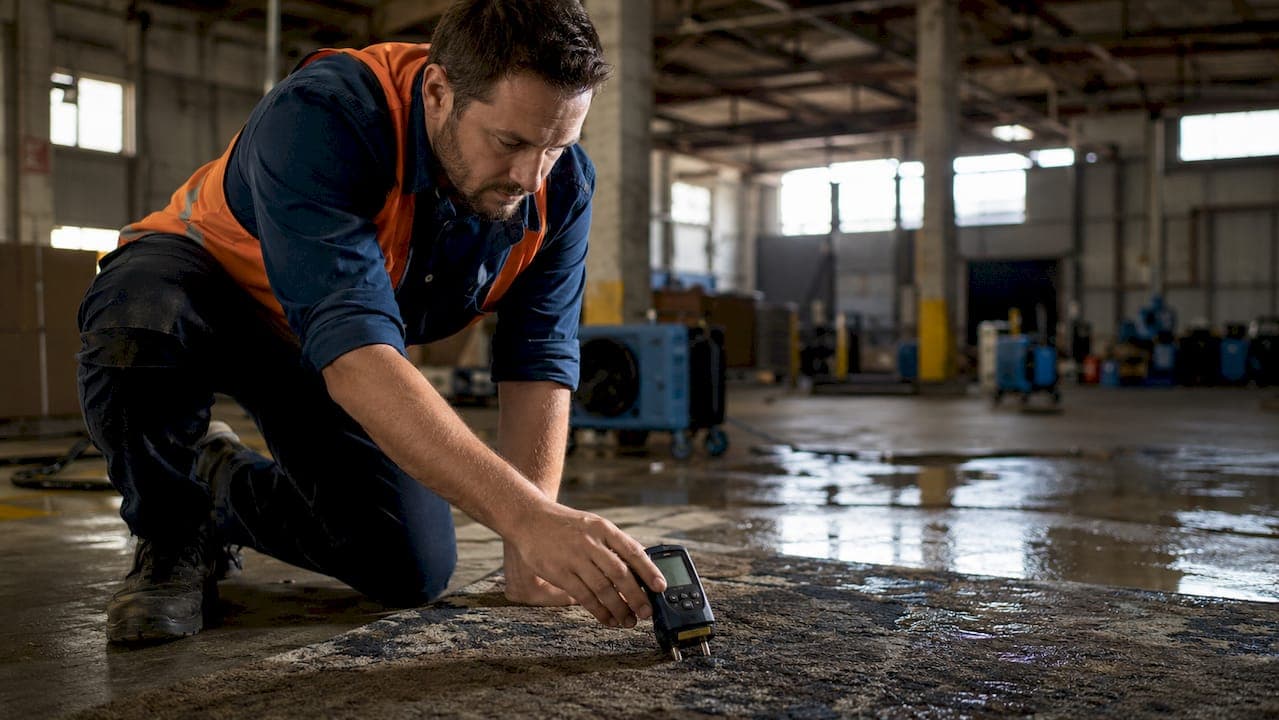
Large-loss water restoration is defined as a specialized, large-scale water damage recovery process required when property damage exceeds typical residential scope in cost, physical area, or operational complexity. This is the industry term used by certified restorers and insurance carriers alike, and it describes a fundamentally different response than a standard water damage call. When a burst pipe floods three floors of an apartment building, or a storm surge saturates a commercial property's electrical rooms and tenant spaces, you are no longer dealing with a routine job. You are dealing with a large-loss event. Knowing what that means, and what to expect, puts you in a far stronger position to protect your property, your finances, and your recovery timeline.
What is large-loss water restoration and when does it apply?

Large-loss water restoration is a scaled-up form of water damage mitigation requiring specialized coordination, documentation, and project management well beyond a standard crew response. The standard industry framework, governed by ANSI/IICRC S500, draws a clear line between routine water damage and large-loss events based on measurable thresholds.
A large-loss event typically meets one or more of these criteria:
- Damage cost exceeds $100,000, triggering specialized insurance carrier protocols and dedicated adjusters
- Multiple floors or tenant spaces are affected, requiring coordination across occupants, building systems, and contractors
- Mitigation operations extend beyond 10 days, meaning drying, extraction, and containment run for weeks, not hours
- Building systems are compromised, including elevators, electrical rooms, or HVAC units
- Business interruption or displacement of residents becomes a documented part of the claim
These thresholds matter because they change how insurance carriers respond. A large-loss claim activates a different tier of adjuster, often with stricter documentation requirements and tighter timelines for scope approval. Business interruption claims and OSHA/ADA compliance requirements are unique to large-loss, multi-tenant, and occupied property restorations. That complexity is why a standard two-person crew cannot manage these jobs alone.
How do water damage categories and drying classes affect large-loss restoration?
The IICRC classifies water damage using two separate scales: categories for contamination level and classes for absorption extent. Both directly determine the methods, equipment, and safety protocols used on a large-loss job.
- Category 1 (clean water): Originates from a sanitary source like a broken supply line. Poses no immediate health risk. Standard extraction and drying apply.
- Category 2 (gray water): Contains contaminants from sources like dishwashers or washing machines. Requires antimicrobial treatment and careful handling of affected materials.
- Category 3 (black water): Sewage, floodwater, or any grossly contaminated source. Category 3 losses require full containment, personal protective equipment, removal of all porous materials, and specialized antimicrobial treatments.
Drying classes describe how much water has been absorbed into building materials:
- Class 1: Minimal absorption, affecting only part of a room. Dries quickly with basic equipment.
- Class 2: Significant absorption into carpet, walls, or structural materials throughout a full room.
- Class 3: Water has saturated ceilings, walls, and insulation. Requires high-volume drying equipment.
- Class 4: Specialty drying situations where water has penetrated dense materials like hardwood, concrete, or plaster. Requires low-grain refrigerant dehumidifiers and extended drying cycles.
In a large-loss event, you frequently encounter multiple categories and classes within the same building. A flooded commercial kitchen may present Category 2 conditions while the adjacent office space shows Class 3 absorption. Correct classification is not a formality. It determines the drying approach and claim size, and misclassifying a loss can result in underdrying, mold growth, and a disputed insurance claim.
Pro Tip: Ask your restoration contractor to show you the moisture map readings for each affected room. If they cannot produce one, that is a red flag. Proper large-loss work generates detailed moisture data at every stage.
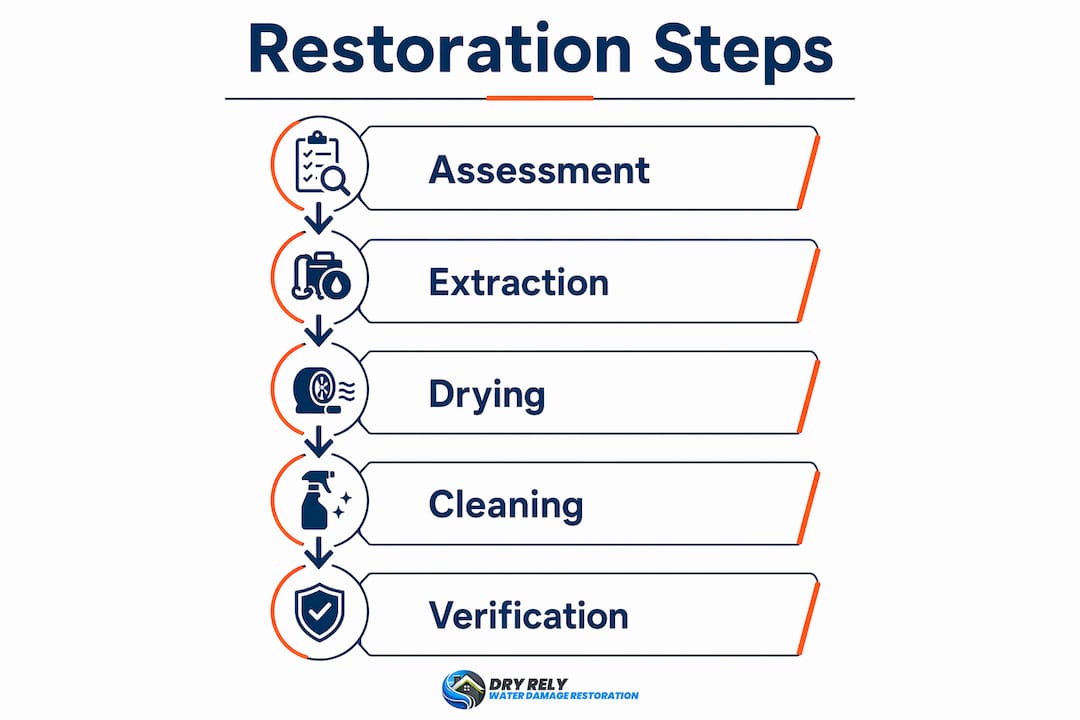
What are the critical documentation and coordination steps in large-loss water restoration?
Early documentation within the first 24 hours is the single most important factor in supporting your insurance claim and preventing disputes. Practitioners treat the first 24–72 hours as a critical window to build a complete evidence and scope record.
Here is what proper documentation looks like in practice:
- Timestamped photos and video of all affected areas before any extraction or demolition begins
- Signed authorization forms from the property owner or manager before work starts
- Carrier notification within the first hours, not days, of the event
- Moisture map data showing meter type, reading locations, and baseline moisture levels in walls, floors, and ceilings
- Equipment placement logs recording the exact location, type, and settings of every dehumidifier and air mover deployed
- Daily monitoring logs with updated moisture readings showing drying progress over time
- Formal progress reports shared with the insurance adjuster at regular intervals
The table below shows the documentation timeline that certified restorers follow on large-loss jobs:
| Timeframe | Documentation Action |
|---|---|
| First 2 hours | Photo/video documentation, carrier notification, signed authorization |
| Hours 2–24 | Moisture mapping, equipment placement logs, initial scope report |
| Days 2–10 | Daily monitoring logs, updated moisture readings, adjuster updates |
| End of mitigation | Certificate of Completion (COC) with final moisture readings |
A Certificate of Completion documents that drying goals per ANSI/IICRC S500 have been met. This is the formal record that closes the mitigation phase and supports the transition to reconstruction.
Coordination is equally critical. Large-loss restoration requires formal communication structures, including a single dedicated project manager and written change orders for every scope adjustment. Oral agreements create confusion and disputes. A dedicated project manager replaces the informal crew-to-owner communication that works on small jobs but fails completely at scale.
Pro Tip: Request a written communication log from your restoration contractor. Every scope change, every adjuster conversation, and every tenant notification should be documented in writing. This protects you if the claim is disputed later.
What practical steps should you take during a large-loss water event?
Your actions in the first hours directly affect both the physical outcome and the insurance claim. Speed and documentation go together.
- Call your insurance carrier immediately. Do not wait until you have assessed the full damage. Early notification preserves your rights under the policy and starts the adjuster assignment process.
- Contact a certified restoration company right away. Extraction within the first hour of crew arrival reduces drying time significantly and prevents secondary damage from microbial growth. Standing water left for 48–72 hours causes exponentially more structural damage.
- Document everything yourself before crews arrive. Use your phone to take timestamped photos and video of every affected area. Your documentation supplements the contractor's record.
- Understand your loss of use coverage. Loss of use coverage reimburses extra living expenses when a home becomes uninhabitable due to water damage, typically capped at 20–30% of dwelling value. On a $400,000 home, that means up to $80,000 in additional living expense coverage. Keep all receipts for temporary housing and meals.
- Do not remove wet materials without authorization. Premature demolition can void coverage or create disputes about the original scope of damage. Let the restoration team document first.
- Participate in pre-work and update meetings. Large-loss jobs run on formal project meetings. Attend them. Ask for written summaries. Knowing what equipment is running and why gives you the ability to spot problems early.
- Watch for signs of proper drying progress. Moisture readings should drop consistently each day. If readings plateau or rise, ask your project manager why. Stalled drying often signals missed moisture pockets that lead to mold growth if left unaddressed.
Property managers handling commercial water damage face the added layer of tenant communication and business continuity. Notify tenants in writing, document their responses, and coordinate access schedules with the project manager to keep the job moving without disrupting operations unnecessarily.
Key Takeaways
Large-loss water restoration requires immediate extraction, formal documentation, and dedicated project management to protect both the property and the insurance claim.
| Point | Details |
|---|---|
| Large-loss thresholds | Events exceeding $100,000, affecting multiple floors, or lasting more than 10 days qualify as large-loss. |
| Categories and classes matter | Correct IICRC classification determines safety protocols, equipment, and the final claim size. |
| First 24 hours are critical | Timestamped photos, moisture maps, and carrier notification in the first hours form the claim foundation. |
| Written communication protects you | All scope changes and adjuster conversations must be documented in writing to prevent disputes. |
| Loss of use coverage applies | Homeowners may access up to 20–30% of dwelling value for additional living expenses during displacement. |
What I have learned managing large-loss jobs in South Florida
The biggest mistake property owners make is treating a large-loss event like a big version of a small water damage job. It is not. The operational difference is not just scale. It is the number of people who have authority to make decisions, and the speed at which miscommunication turns into a denied claim.
At Dry Rely Water Damage Restoration, we have restored over 15,000 properties across South Florida. The jobs that go sideways almost always share one trait: no one was managing communication. A contractor tells a tenant one thing, the adjuster hears another, and the property manager is left holding a disputed invoice. Written logs and a single point of contact are not bureaucratic overhead. They are the difference between a smooth claim and a six-month fight.
The other pattern we see constantly is delayed extraction. Property owners wait to call because they want to assess the damage themselves first. Every hour of standing water raises the drying class and the cost. Category 2 water left for 48 hours becomes a Category 3 situation. That reclassification changes the entire scope of work and the claim amount. Call fast. Document fast. The property can be saved, but only if the response matches the urgency.
— Dry Rely Water Damage Restoration
How Dry Rely Water Damage Restoration handles large-loss events
When a large-loss water event hits your property, the response window is narrow and the stakes are high.
Dry Rely Water Damage Restoration deploys certified technicians to South Florida properties within 60 minutes of your call. The team uses thermal imaging for leak detection, industrial-grade extraction equipment, and IICRC-compliant drying protocols on every job. For large-loss situations, Dry Rely assigns a dedicated project manager who handles adjuster communication, daily moisture reporting, and scope documentation from start to finish. Whether you are a homeowner facing displacement or a property manager protecting multiple tenant spaces, Dry Rely's water damage restoration services cover the full recovery process. Call Dry Rely Water Damage Restoration now for an immediate assessment.
FAQ
What qualifies as a large-loss water damage event?
A large-loss water damage event typically involves damage costs exceeding $100,000, affects multiple floors or tenant spaces, or requires more than 10 days of active mitigation. Insurance carriers assign specialized adjusters to these claims.
How long does large-loss water restoration take?
Large-loss restoration commonly runs from two weeks to several months, depending on the drying class, contamination category, and scope of structural repairs needed after mitigation is complete.
What is a Certificate of Completion in water restoration?
A Certificate of Completion documents that all structural materials have reached target moisture levels per ANSI/IICRC S500. It closes the mitigation phase and supports the final insurance claim for reconstruction.
Does homeowner's insurance cover large-loss water damage?
Most homeowner's policies cover sudden and accidental water damage, including loss of use expenses up to 20–30% of the dwelling value. Flood damage from external sources typically requires a separate flood insurance policy.
Why does water damage category affect my restoration cost?
Category 3 water damage requires full containment, removal of all porous materials, and specialized antimicrobial treatment. Those additional steps significantly increase labor, materials, and equipment costs compared to a Category 1 clean-water loss.