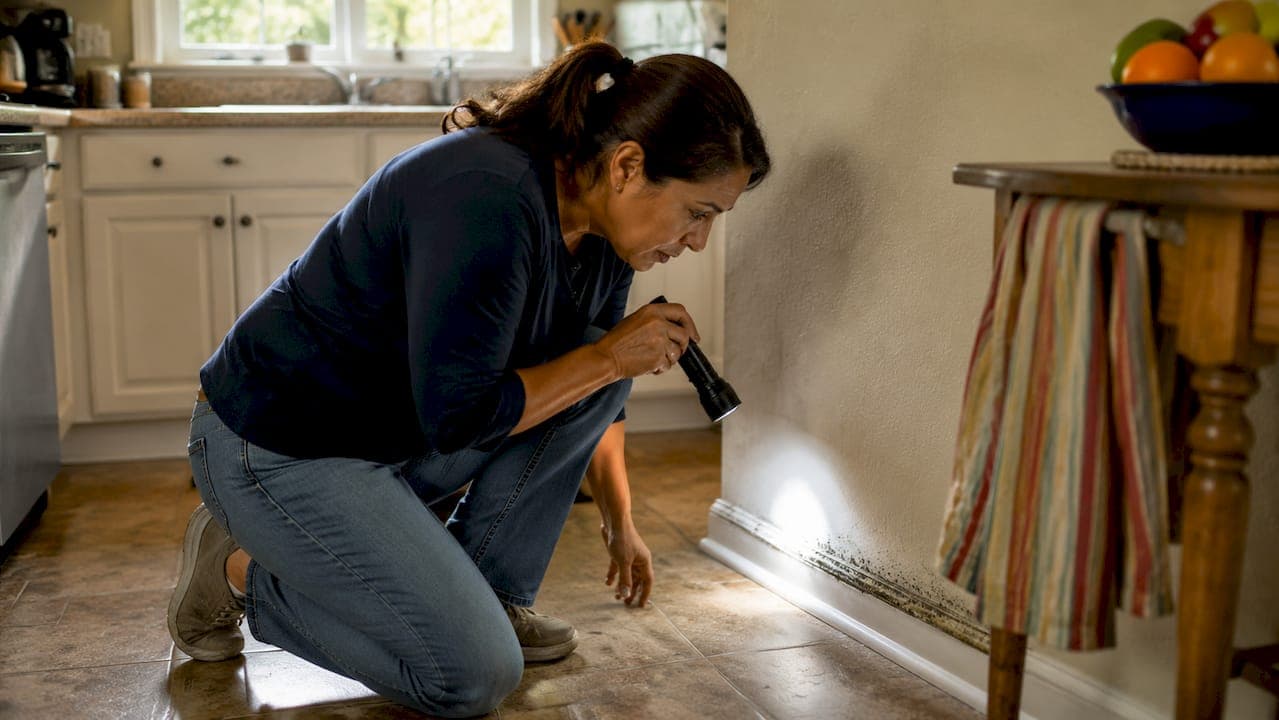
Mold remediation is defined as a structured, multi-phase process that reduces indoor mold to safe, natural baseline levels by removing mold growth and correcting the moisture source that caused it. This is the industry term recognized by the EPA and codified in the ANSI/IICRC S520 standard, which governs professional mold remediation in the United States. Understanding what mold remediation means separates homeowners who fix the problem from those who simply hide it. The process covers inspection, containment, physical removal, air filtration, drying, and post-remediation verification. Simple mold cleanup, by contrast, addresses only what you can see. That distinction matters enormously for your health, your home's structure, and your insurance coverage.
What does mold remediation mean vs. mold removal?
Mold removal is a task. Mold remediation is a managed process. That one sentence explains why the two terms are not interchangeable.
Mold removal refers to the physical act of cleaning or discarding moldy materials without formal protocols, containment, or verification. You scrub the visible growth off a bathroom tile, bag it, and move on. No moisture source is identified. No air quality check follows. The mold returns within weeks because the conditions that fed it were never addressed.
Mold remediation, as defined by the ANSI/IICRC S520 standard, includes containment using negative air pressure, moisture source correction, physical removal, HEPA air filtration, and clearance testing. Each phase depends on the one before it. Skip moisture correction and the rest of the work is temporary.
The regulatory gap between the two approaches carries real consequences. The EPA does not regulate mold removal, meaning anyone can call themselves a mold removal specialist with no training or accountability. Professional remediation follows recognized protocols that insurers and public health agencies accept as the standard of care. Confusing the two can void your insurance claim and leave a health hazard in your walls.
| Point | Mold removal | Mold remediation |
|---|---|---|
| Scope | Visible mold only | Full process: source, mold, air, verification |
| Moisture correction | No | Yes, required |
| Containment | No | Yes, negative air pressure |
| Air filtration | No | Yes, HEPA filtration |
| Post-work verification | No | Yes, clearance testing |
| Regulatory standard | None | ANSI/IICRC S520 |
Why moisture control is the foundation of mold remediation
Moisture control is not one step in the mold remediation process. It is the step that determines whether every other step holds.
New mold growth begins within 24–48 hours on wet, porous materials like drywall, wood framing, and carpet padding. That window is shorter than most homeowners expect. A slow pipe drip behind a cabinet or condensation on an uninsulated wall is enough to restart a mold colony after remediation if the source goes unfixed.
The most common moisture sources that professionals address during remediation include:
- Plumbing leaks inside walls or under slabs
- Roof leaks that saturate attic insulation and ceiling joists
- Condensation on HVAC ducts and cold water pipes
- Poor bathroom ventilation trapping humidity in wall cavities
- Flooding or storm water intrusion that was not fully dried
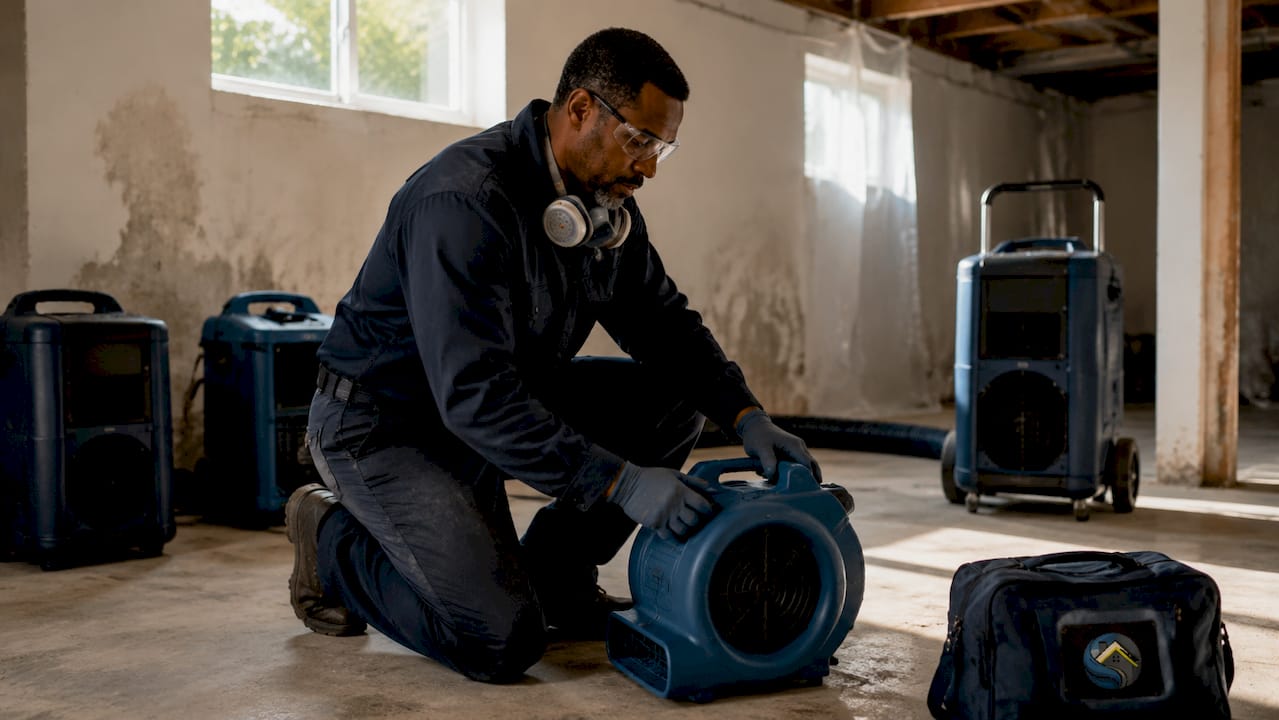
Drying must be thorough before any rebuilding begins. Professionals use industrial dehumidifiers and air movers to bring moisture readings in structural materials down to acceptable levels, verified with moisture meters. Rebuilding over damp framing is one of the most expensive mistakes a homeowner can make.
Pro Tip: Check behind refrigerators and under dishwashers during any mold inspection. Slow appliance leaks are among the most overlooked moisture sources and can feed mold growth for months before anyone notices.
What are the professional mold remediation steps?
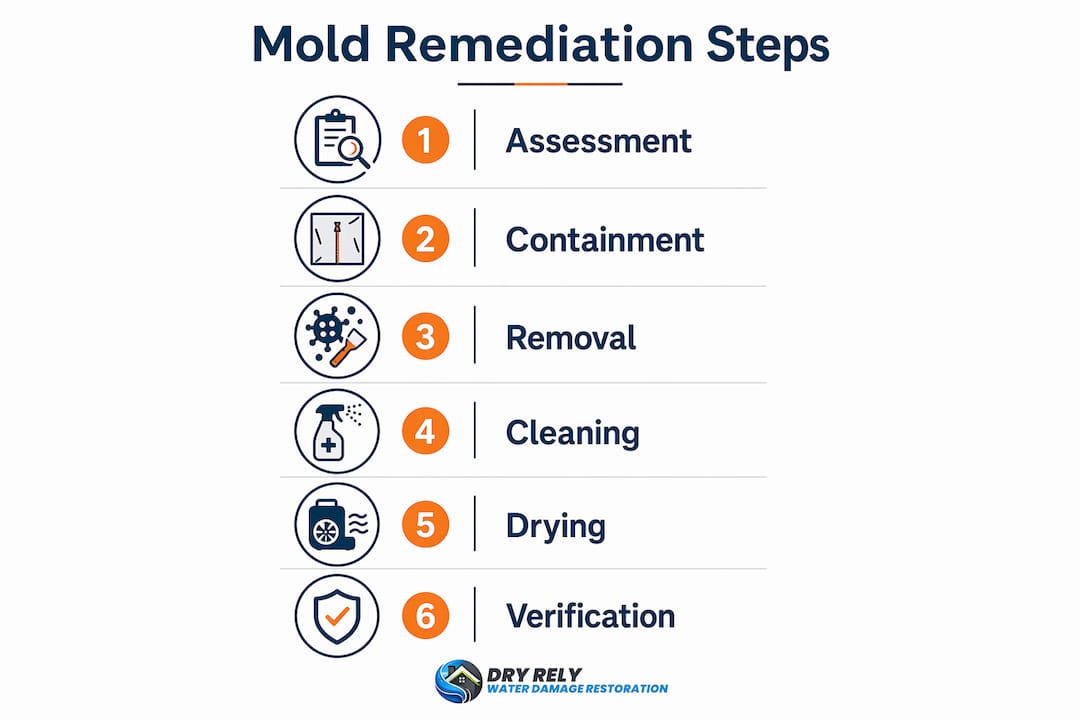
Professional mold remediation follows a defined sequence. Skipping any phase increases the risk of recurrence and health exposure.
-
Inspection and mold assessment. A certified technician identifies the extent of mold growth, locates moisture sources using tools like thermal imaging cameras, and determines which materials are salvageable versus which require removal.
-
Containment. Workers seal off the affected area using plastic sheeting and establish negative air pressure to prevent mold spores from spreading to clean areas of the home during work. This step protects your family and your HVAC system.
-
Physical mold removal. Porous materials with deep mold penetration, such as drywall and insulation, are removed and bagged. Hard surfaces are scrubbed. Physical removal and drying are the primary effective methods against mold. Chemical biocides alone do not neutralize allergenic mold spores.
-
HEPA air filtration. Air scrubbers fitted with HEPA filters run continuously during and after removal. Dead mold spores left airborne after treatment still trigger allergies and respiratory symptoms if not captured.
-
Moisture correction and drying. The original leak or moisture source is repaired. Industrial drying equipment runs until moisture readings in structural materials reach safe levels.
-
Post-remediation verification. A clearance test, often performed by an independent inspector, confirms that mold concentrations have returned to safe baseline levels. The goal is never zero mold spores. Mold spores exist naturally in all indoor environments. The goal is returning to normal background levels.
Pro Tip: Request that post-remediation clearance testing be performed by a different company than the one that did the remediation work. Independent verification removes any conflict of interest and gives you documentation that holds up with insurers.
When should you handle mold yourself vs. hire a professional?
The EPA provides a clear starting point for this decision. Homeowners can handle mold cleanup themselves if the affected area is smaller than 10 square feet and was not caused by sewage or serious water damage. That is roughly a patch smaller than a standard ceiling tile.
That 10-square-foot threshold is a guideline, not a hard regulatory limit. Sewage contamination or major water events always require professional remediation regardless of the visible mold area. Sewage introduces pathogens beyond mold. Flooding saturates structural cavities that surface cleaning cannot reach.
Hire a certified professional when any of these conditions apply:
- The mold covers more than 10 square feet
- The mold returned after a previous cleanup attempt
- The moisture source was a flood, sewage backup, or roof leak
- Anyone in the household has asthma, allergies, or a compromised immune system
- You cannot identify where the moisture is coming from
- Mold is present inside HVAC ducts or air handlers
For smaller DIY cleanups, wear an N95 respirator, nitrile gloves, and eye protection. Use soap and water or a diluted detergent solution on hard, non-porous surfaces. Bleach is often misused in mold cleanup. Bleach is insufficient alone and can be hazardous in enclosed spaces. Physical scrubbing and thorough drying do more to prevent regrowth than any chemical spray.
What professionals provide that DIY cannot includes containment to protect the rest of your home, air monitoring to confirm spore levels, and documentation for insurance claims. Those three things are not available in a spray bottle.
Key takeaways
Mold remediation is a multi-phase, standards-based process that addresses both mold growth and its moisture source to prevent recurrence and protect indoor air quality.
| Point | Details |
|---|---|
| Remediation vs. removal | Remediation fixes the moisture source and verifies results; removal only cleans visible mold. |
| 24–48 hour mold window | Mold begins growing on wet porous materials within 24–48 hours, making fast moisture correction critical. |
| ANSI/IICRC S520 standard | Professional remediation follows this standard, covering containment, HEPA filtration, and clearance testing. |
| 10-square-foot DIY rule | The EPA recommends professional help for mold areas larger than 10 square feet or after sewage or flood events. |
| Post-remediation verification | Independent clearance testing confirms mold levels returned to safe baseline and supports insurance documentation. |
What we have learned from remediating mold in South Florida homes
South Florida's humidity creates mold conditions that most of the country never deals with. After restoring over 15,000 properties, the team at Dry Rely Water Damage Restoration has seen the same mistakes repeated by well-meaning homeowners and even some contractors.
The biggest mistake is treating mold as a surface problem. Homeowners paint over discoloration, spray a biocide, and consider the job done. Three months later, the mold is back and has spread further into the wall cavity. The paint and the spray did nothing to address the moisture that was still present in the framing behind the drywall.
The second mistake is skipping post-remediation verification. Contractors who skip clearance testing are either cutting costs or avoiding accountability. That test is the only objective proof that the work succeeded. Without it, you have no documentation for your insurer and no way to confirm the air in your home is safe.
The third mistake is underestimating how far moisture travels. A roof leak does not stay at the ceiling. Water follows framing, insulation, and electrical conduits into walls and floors. Thermal imaging reveals this spread in minutes. Without it, you are guessing at the scope of the problem and almost certainly underestimating it.
Our honest advice: get the moisture source identified and confirmed fixed before any mold removal begins. Everything else depends on that first step being done correctly. You can read more about protecting your home after water events in our mold prevention guide for practical next steps.
— Dry Rely Water Damage Restoration
Dry Rely Water Damage Restoration and certified mold remediation in South Florida
Mold problems in South Florida move fast. High humidity, frequent storms, and aging plumbing create conditions where a small leak becomes a serious mold situation in days, not weeks.
Dry Rely Water Damage Restoration provides certified mold removal and remediation services that follow ANSI/IICRC S520 standards from inspection through clearance testing. The team uses thermal imaging for leak detection, industrial drying equipment, and HEPA air filtration on every job. Technicians arrive on-site within 60 minutes of your call. For moisture problems at the source, the team also handles water damage restoration and professional leak detection across South Florida. Call Dry Rely Water Damage Restoration before a small mold patch becomes a structural problem.
FAQ
What does mold remediation mean in simple terms?
Mold remediation is a structured process that removes mold, fixes the moisture source that caused it, and verifies that indoor mold levels have returned to safe baseline levels. It goes beyond surface cleaning to address the root cause.
How is mold remediation different from mold removal?
Mold removal is physical cleaning of visible mold with no formal protocols. Mold remediation follows standards like ANSI/IICRC S520 and includes containment, moisture correction, air filtration, and clearance testing.
Can I remediate mold myself?
The EPA recommends DIY cleanup only for mold areas smaller than 10 square feet that were not caused by sewage or serious water damage. Larger areas, flood-related mold, or mold affecting HVAC systems require a certified professional.
How long does the mold remediation process take?
Timeline depends on the size of the affected area and the extent of moisture damage. Small residential jobs often take one to three days. Larger jobs involving structural drying and rebuilding can take one to two weeks.
Does mold remediation completely eliminate all mold spores?
No. The goal of mold remediation is not to eliminate every mold spore, which is impossible. The goal is to reduce indoor mold concentrations to safe, natural background levels as confirmed by post-remediation clearance testing.