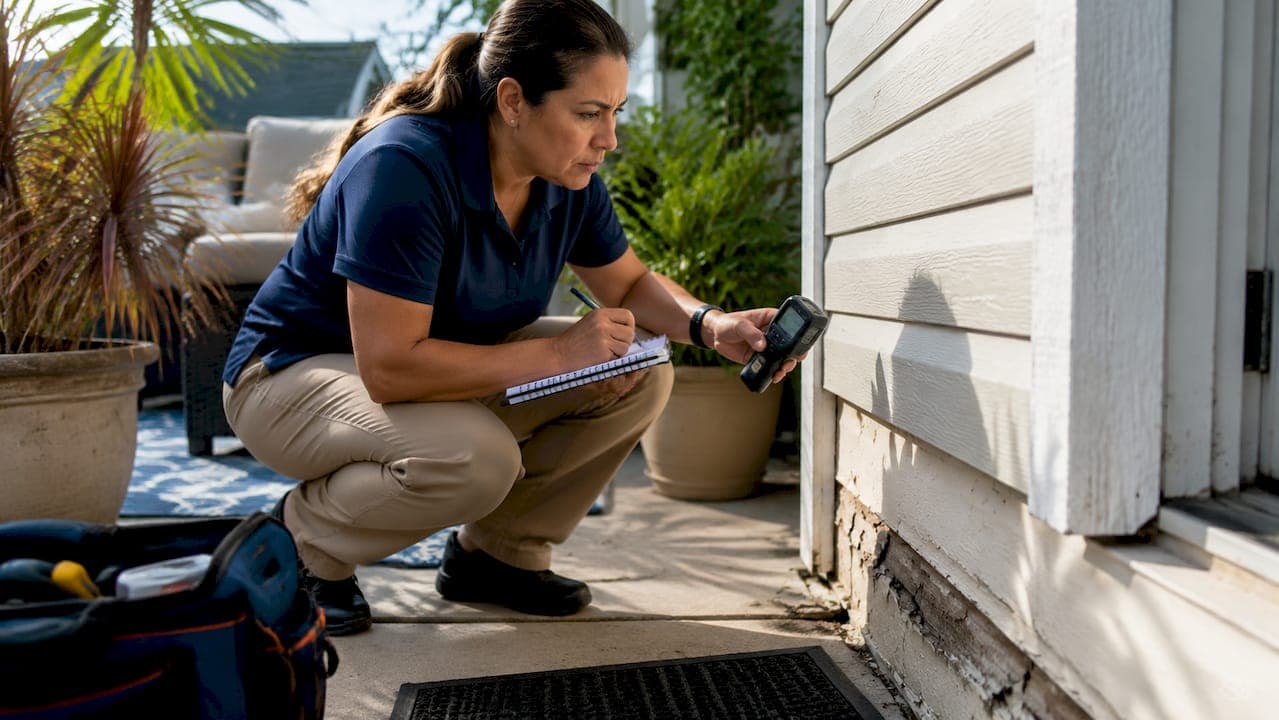
Secondary water damage is the ongoing deterioration caused by residual moisture left behind after an initial water intrusion event. Most homeowners focus on the visible flooding or the burst pipe. The real threat quietly spreads inside your walls, under your floors, and through your insulation long after the water source is gone. Understanding this distinction can mean the difference between a manageable repair and a costly, months-long restoration.
What is secondary water damage and how does it develop?
Secondary water damage is defined as the structural degradation, microbial growth, and material deterioration that occurs when residual moisture is not fully removed after a primary water event. The primary event is the flood, the leak, or the pipe burst. Secondary damage is everything that follows when that moisture lingers.
Residual moisture migrates through building materials by capillary action, meaning it travels upward and sideways through drywall, wood framing, and insulation without any visible water present. This is why a room can look completely dry while moisture is actively destroying the structure behind the walls.
The timeline of secondary damage is predictable and fast. Mold begins growing within 24–48 hours of water intrusion when materials are not professionally dried. After one week of persistent moisture, severe structural damage becomes evident.
| Time after water event | What happens |
|---|---|
| 0–24 hours | Moisture absorbs into drywall, wood, and insulation |
| 24–48 hours | Mold spores activate; wood begins to swell |
| 48–72 hours | Drywall softens; metal fixtures begin to corrode |
| 72+ hours | Structural weakening accelerates; remediation costs rise sharply |
Delays beyond 72 hours after initial water exposure drastically increase restoration complexity and costs. Acting within the first 24–48 hours is the single most effective way to limit secondary damage.
- Water source stops or is stopped.
- Residual moisture absorbs into porous materials.
- Humidity rises inside wall cavities and subfloors.
- Mold colonies form and spread.
- Wood rots, drywall collapses, and structural integrity weakens.
Pro Tip: After any water event, check your indoor humidity with a basic hygrometer. A reading above 60% relative humidity signals that moisture is still active in your home, even if surfaces feel dry.
What are the signs and effects of secondary water damage?
The effects of secondary water damage range from cosmetic nuisances to serious health hazards. Catching the signs early limits both repair costs and health risks.
Visible signs to look for
- Musty or earthy odors in rooms that were previously wet
- Peeling, bubbling, or stained paint on walls and ceilings
- Warped or buckled hardwood and laminate flooring
- Sagging or soft spots in drywall
- Discoloration or water stains on ceilings and baseboards
- Visible mold growth, often appearing as black, green, or gray patches
- Swollen or warped cabinetry near sinks or appliances
Hidden effects that are harder to detect
Secondary damage often occurs hidden behind walls, under floors, and within insulation. Homeowners frequently believe their property is dry when moisture is actively causing rot and mold growth out of sight. This hidden nature is what makes secondary water damage so dangerous.
Mold growth creates serious indoor air quality problems. Prolonged exposure to mold spores causes respiratory issues, allergic reactions, and in vulnerable individuals, more serious health complications. Structural weakening from wood rot and corroded fasteners can compromise load-bearing elements over time.
Pro Tip: If you notice a persistent musty smell but see no visible mold, check signs of hidden water damage in areas like under sinks, inside closets adjacent to exterior walls, and beneath bathroom flooring.
How does secondary water damage differ from primary water damage?
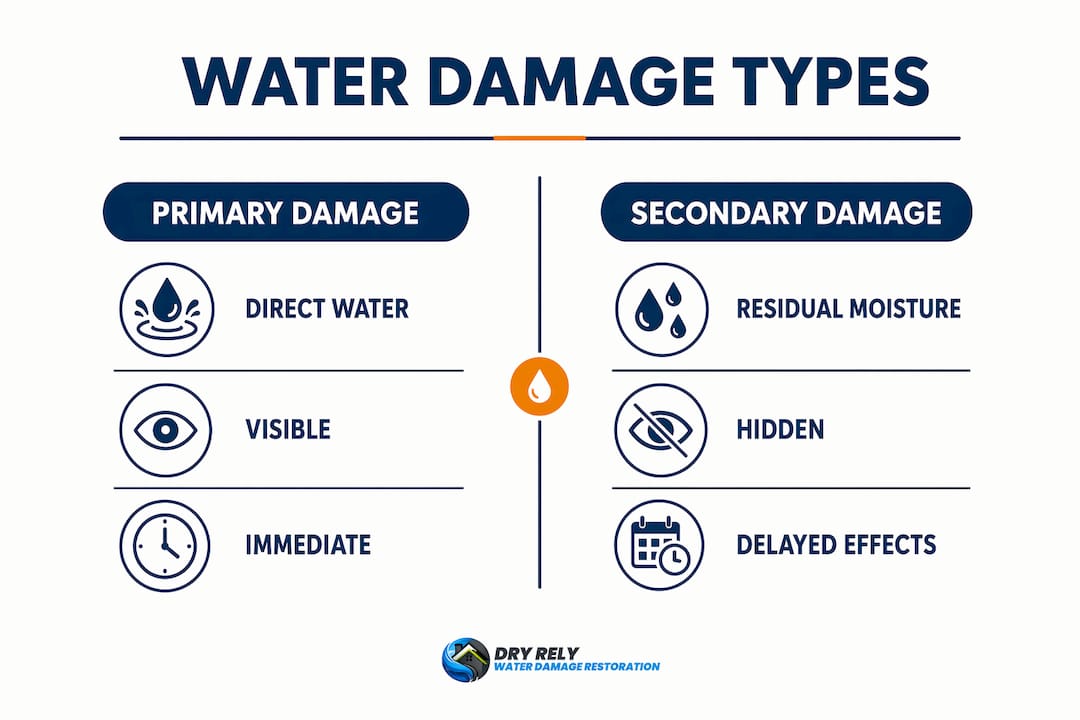
Primary water damage is the immediate, visible harm caused by direct water contact during a flood, leak, or pipe failure. Secondary water damage is the time-delayed deterioration that follows when moisture is not fully extracted and dried.
The distinction matters for two reasons: restoration approach and insurance coverage. Secondary damage can alter the water classification of an insurance claim, potentially complicating coverage if mitigation was delayed. Insurers look at when the damage occurred and whether the homeowner took reasonable steps to stop it.
| Factor | Primary water damage | Secondary water damage |
|---|---|---|
| Cause | Direct water contact | Residual moisture after water event |
| Timing | Immediate | Hours to weeks after initial event |
| Visibility | Usually visible | Often hidden inside walls and floors |
| Restoration complexity | Lower | Higher; requires moisture mapping |
| Insurance risk | Standard claim | May be denied if mitigation was delayed |
| Examples | Flooded floors, soaked furniture | Mold, wood rot, structural weakening |
Documentation of timing and actions taken after a water event is critical to protecting your insurance claim. Photograph damage immediately, note when the water source was stopped, and keep records of every restoration step taken.
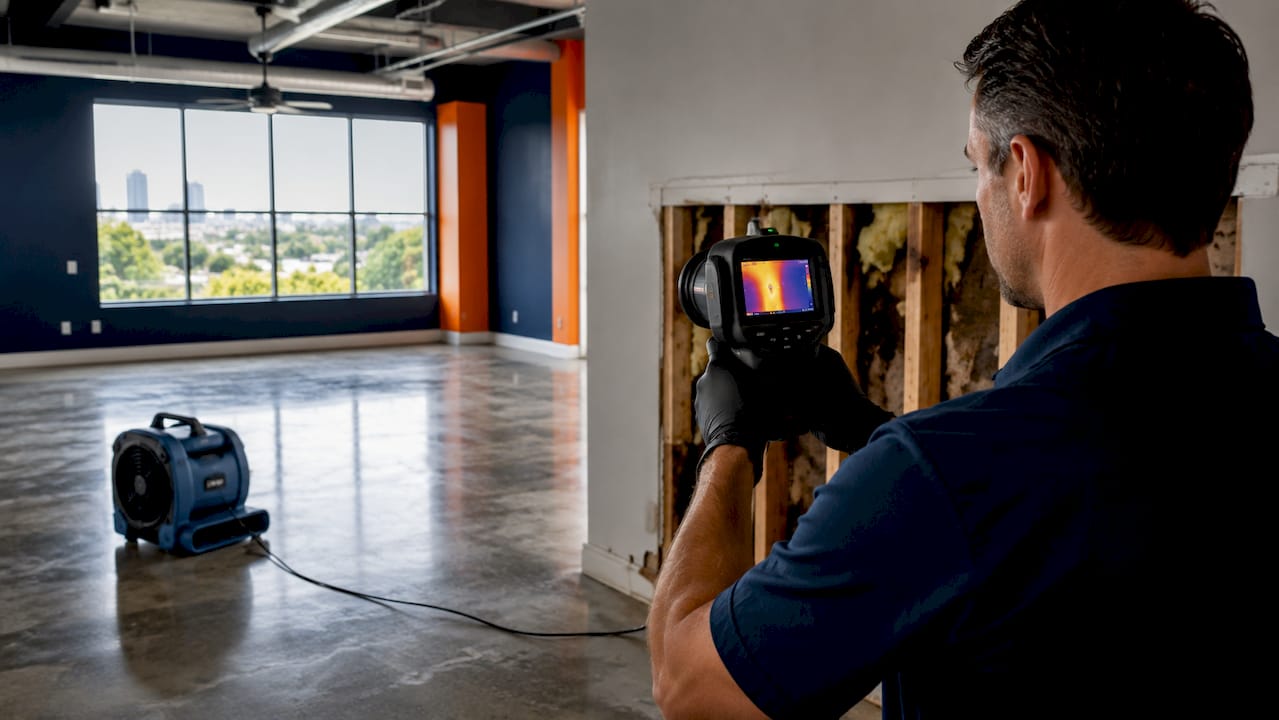
The restoration process for secondary damage is more complex because it requires identifying moisture that is not visible to the naked eye. Professional tools like thermal imaging cameras and moisture meters are necessary to locate trapped dampness inside building assemblies.
How can you prevent secondary water damage after a leak or flood?
Preventing secondary water damage comes down to speed and thoroughness. The faster moisture is removed, the less damage occurs.
-
Extract standing water immediately. Use a wet/dry vacuum for small amounts. For any significant flooding, call a professional water extraction service within hours, not days.
-
Dry the air, not just the surfaces. Effective mitigation requires industrial dehumidifiers to reduce airborne humidity. Surface drying alone leaves moisture trapped inside walls and subfloors.
-
Use thermal imaging to find hidden moisture. Moisture can migrate by capillary action into wall cavities and subfloors, remaining trapped for weeks. Thermal imaging cameras detect temperature differences caused by hidden dampness.
-
Monitor humidity continuously. Keep indoor relative humidity below 60% until all materials test dry. High humidity above that threshold fuels mold growth even in areas that appear unaffected.
-
Do not rely on DIY drying alone. DIY cleanup often fails to remove deep moisture, leading to persistent odors, warped flooring, and structural weakening. Industrial drying equipment is not available at hardware stores.
-
Act within the first 24 hours. Review what to do in the first 24 hours after water damage to follow the right sequence of steps before secondary damage takes hold.
Pro Tip: After a water event, open interior doors and run fans to improve air circulation. This slows moisture absorption into walls while you wait for professional help. Do not use fans if mold is already visible, as this spreads spores.
The average cost of mold remediation related to delayed water mitigation ranges from $2,300 to $2,400 nationally. That figure does not include structural repairs, flooring replacement, or drywall work. Early professional intervention costs far less.
What restoration professionals see that homeowners miss
The most common mistake homeowners make after a water event is assuming the damage is over once the water is gone. Secondary water damage is underestimated precisely because it happens quietly and out of sight.
At Dry Rely Water Damage Restoration, we have responded to thousands of calls where homeowners used fans and towels for two days, then called us a week later when mold appeared. By that point, the drywall, insulation, and sometimes the wood framing all needed replacement. The original cleanup cost would have been a fraction of the final bill.
Surface dryness does not guarantee the absence of moisture. Only professional moisture mapping and thermal imaging can confirm that a structure is genuinely dry. We use both on every job because we have seen too many cases where a wall felt dry to the touch but registered high moisture readings two inches inside.
The other thing homeowners underestimate is the insurance angle. Failure to mitigate promptly can result in claim denial if the insurer documents that damage was preventable. Calling a certified restoration company within 24 hours creates a paper trail that protects you. Waiting a week creates a liability.
Dry Rely Water Damage Restoration guarantees technicians on-site within 60 minutes across South Florida. That response time exists because we know the first hours after a water event are the ones that determine whether you face a minor repair or a major restoration.
— Dry Rely Water Damage Restoration
Dry Rely Water Damage Restoration: stop secondary damage before it starts
When water damage hits your South Florida home, the clock starts immediately. Dry Rely Water Damage Restoration deploys certified technicians within 60 minutes, equipped with thermal imaging cameras, industrial dehumidifiers, and professional moisture meters to find and eliminate hidden moisture before it becomes mold or structural rot.

Our team handles the full scope of water damage restoration from initial extraction through complete drying and structural assessment. We also provide mold removal and remediation when secondary damage has already taken hold. With over 15,000 properties restored and a 4.9-star rating from over 200 reviews, Dry Rely Water Damage Restoration delivers results you can verify. Call us the moment water enters your home.
Key takeaways
Secondary water damage is the most costly and preventable consequence of any water intrusion event, and acting within 24–48 hours is the only reliable way to stop it.
| Point | Details |
|---|---|
| Secondary damage definition | Deterioration caused by residual moisture after the initial water source is gone. |
| Critical response window | Act within 24–48 hours to prevent mold growth and structural damage. |
| Hidden moisture risk | Walls and floors can feel dry while moisture causes active damage inside. |
| DIY drying limitations | Consumer fans and towels cannot remove deep moisture from building materials. |
| Insurance protection | Document all actions and timing immediately to protect your claim from denial. |
FAQ
What is secondary water damage in simple terms?
Secondary water damage is the harm caused by moisture left behind after a flood or leak, including mold, wood rot, and structural weakening. It develops after the original water source is stopped and worsens the longer moisture remains.
How quickly does secondary water damage develop?
Mold growth begins within 24–48 hours of water intrusion when materials are not professionally dried. Structural damage becomes evident after one week of persistent moisture.
Can secondary water damage be hidden inside walls?
Yes. Moisture migrates by capillary action into wall cavities, subfloors, and insulation, where it causes damage that is invisible from the surface. Thermal imaging and professional moisture meters are required to detect it reliably.
Does homeowners insurance cover secondary water damage?
Coverage depends on whether the homeowner took reasonable steps to mitigate damage promptly. Delayed mitigation can result in claim denial, so documenting all actions and calling a certified restoration company quickly is critical.
How do you repair secondary water damage?
Repair requires professional moisture extraction, industrial dehumidification, thermal imaging to locate hidden dampness, and removal of affected materials like drywall and insulation. The water damage restoration process typically includes drying, mold testing, and structural assessment before any rebuilding begins.